

/https%3A%2F%2Fcdn-tor.buminteractif.com%2F2026%2F07%2F27211547%2Ftrump-canada-getty45634fgdfg4534dfgdfgdfg.jpg)
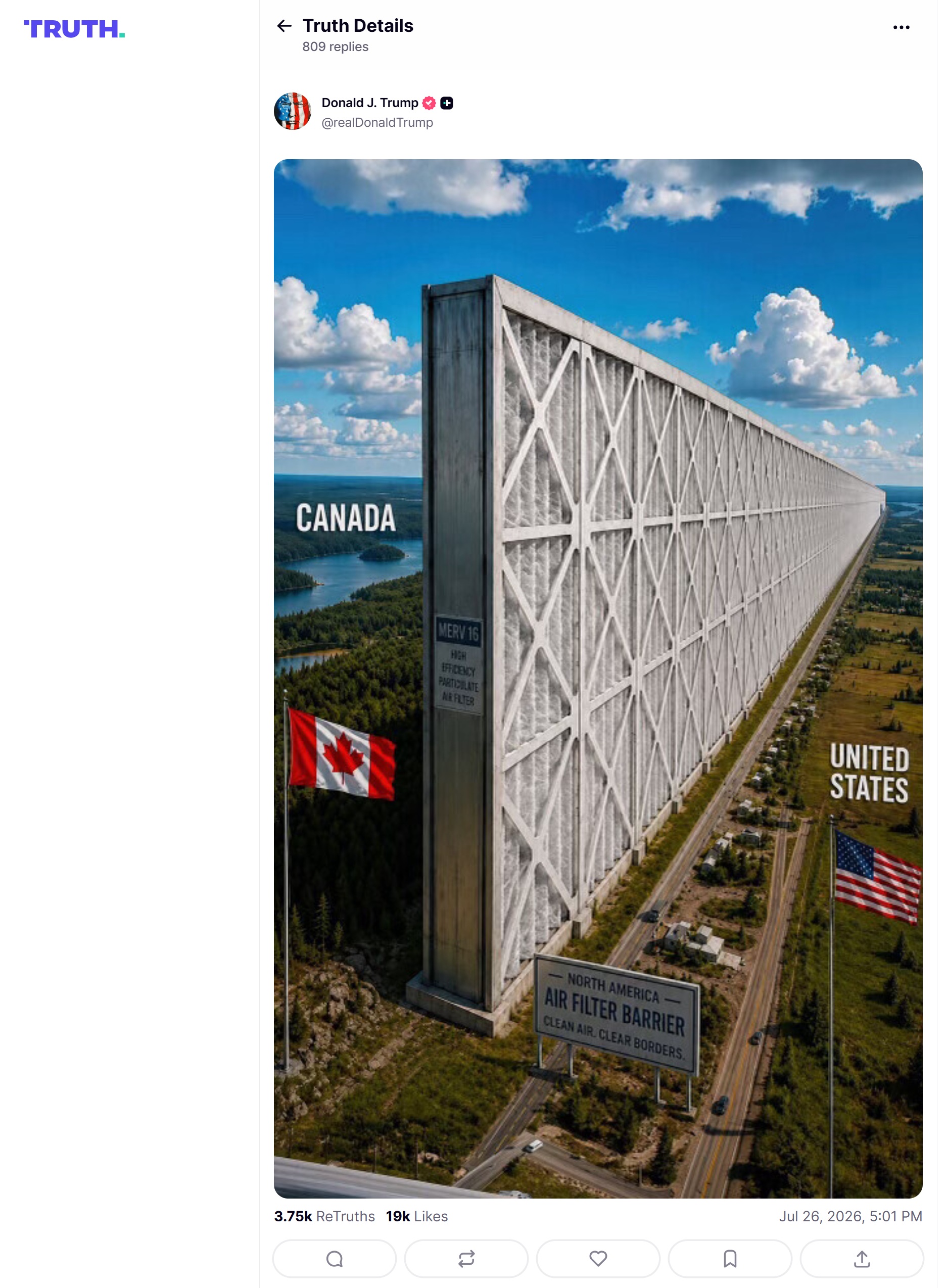
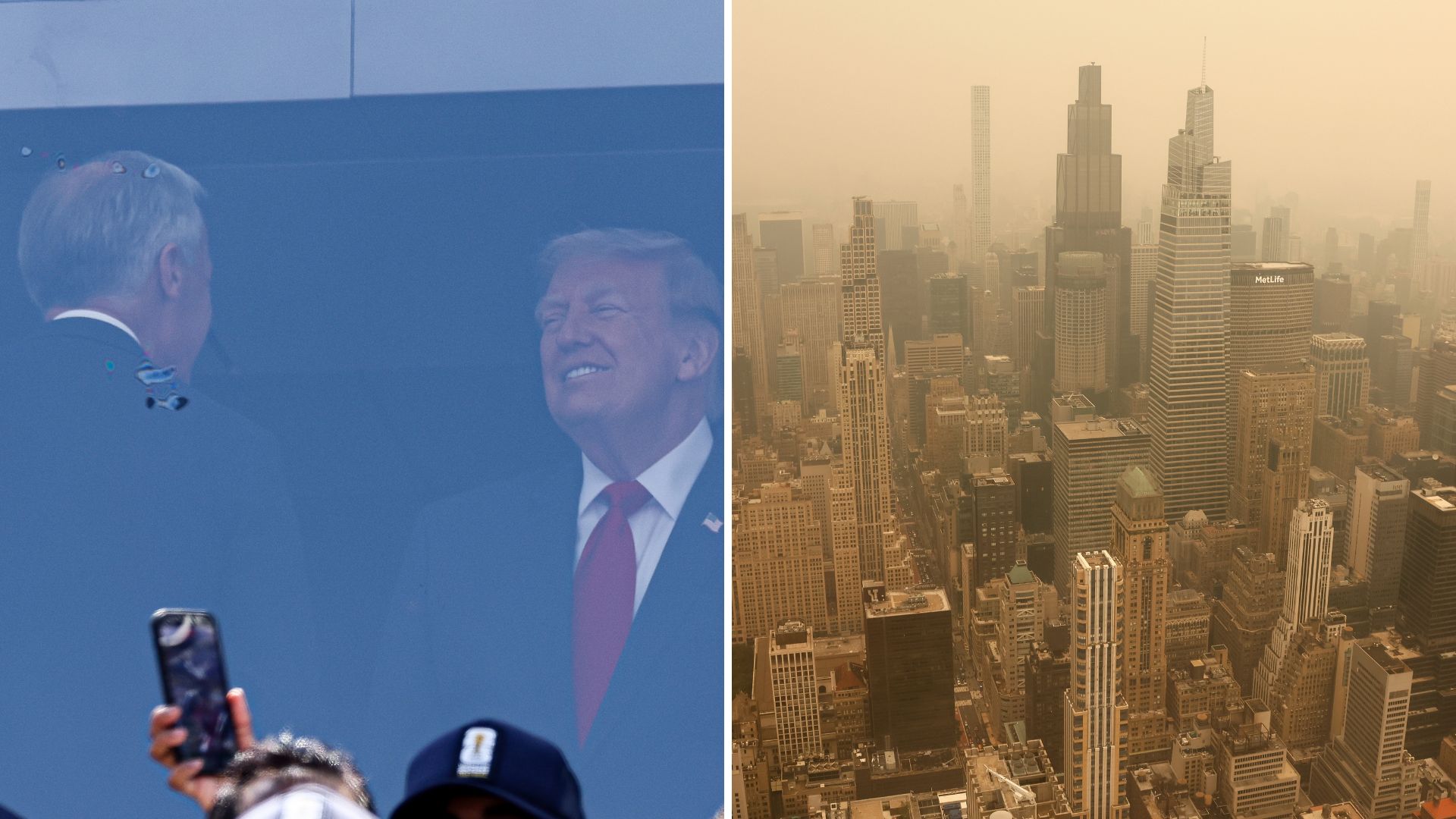
Days after threatening to impose sweeping trade tariffs on Canada over wildfire smoke drifting into the United States, Donald Trump intensified his campaign by sharing a satirical image on Truth Social portraying a massive air filter stretching across the Canada-U.S. border. The post followed several days of increasingly confrontational rhetoric in which Trump accused Canada of failing to manage its forests and allowing smoke to engulf major American cities. He argued that the United States was being unfairly exposed to hazardous air quality and suggested Ottawa should bear financial responsibility for the consequences. The image, depicting an enormous filtration system blocking smoke before it crossed the border, quickly circulated online and became the latest symbol of an escalating political dispute that has transformed an environmental emergency into another flashpoint in the broader trade confrontation between Washington and Ottawa. The unusual post also underscored Trump's willingness to use social media to reinforce policy arguments that increasingly blend environmental issues with his America First economic agenda.
Trump's latest criticism builds on a series of statements linking Canada's wildfire season directly to U.S. trade policy. In a lengthy Truth Social post published days earlier, the president argued that the smoke blanketing parts of the United States was the result of poor forestry practices rather than unavoidable natural conditions. He wrote: «We are holding Canada responsible for the fact that they are not properly maintaining their Forests, and Brush therein, and the United States is being unnecessarily invaded by filthy, polluted, and unhealthy air, the quality of which is dangerous, and totally unacceptable!» Trump went on to accuse Canadian authorities of ignoring basic forest management, adding: «Canada has refused to engage in basic Forest Management and Debris Removal, knowing that such refusal will lead to exactly this result.» He further described the situation as «Willful Negligence» and concluded that the financial impact of the smoke «must of necessity be added to the TARIFFS Canada is currently paying.» Those remarks effectively tied wildfire smoke to his expanding tariff strategy against one of America's closest trading partners.
«Canada stands ready to engage intensively to address outstanding issues with the U.S. to the mutual benefit of our citizens. In all circumstances, Canada will work relentlessly and take any measures necessary to build our strength at home and to support Canadian workers, farmers, businesses, and families.»
-Canada Prime Minister, Mark Carney
The wildfire dispute has unfolded alongside an already tense week in U.S.-Canada trade relations. Before the smoke controversy erupted, the White House had already announced plans to impose new 50% tariffs on a broad range of Canadian products, with the measures scheduled to take effect on Aug. 19. The administration has argued that the penalties are intended to address longstanding grievances involving Canada's supply-managed dairy industry and provincial decisions to remove American alcoholic beverages from retail shelves. The latest confrontation also follows the administration's announcement that it intends to withdraw from the United States-Mexico-Canada Agreement, significantly increasing uncertainty surrounding North American trade. Defending the new measures, the White House rejected suggestions that the tariffs were designed simply to punish Canada, instead declaring: «President Trump is taking action to hold Canada accountable for its continued discrimination against and unreasonable and unequal treatment of U.S. commerce that has burdened and disadvantaged hardworking Americans.»
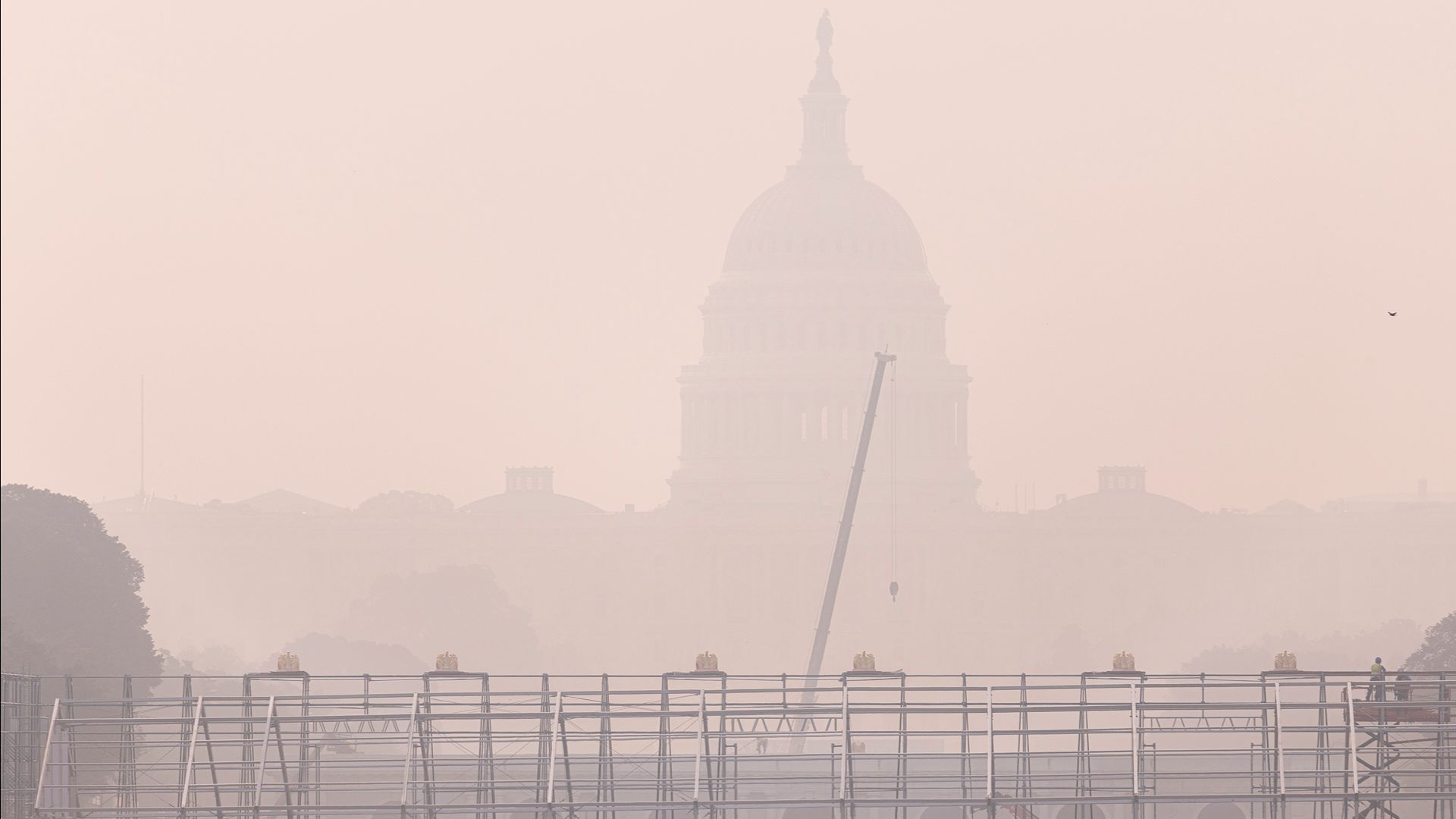
Canadian officials rejected Trump's accusations almost immediately, arguing that the president's portrayal of the wildfire crisis ignored both the scale of Canada's forests and the scientific realities driving increasingly destructive fire seasons. Prime Minister Mark Carney noted that Canada's forested land covers an area roughly eight times larger than Texas, making it impossible to eliminate massive wildfires through routine brush clearing or logging alone. Canadian authorities have emphasized that prolonged drought, extreme heat and rapidly changing weather conditions have fueled unprecedented fires across the country's vast boreal forests, where many blazes burn in remote regions inaccessible to firefighting crews. Carney also pointed out that Canada has historically dispatched water bombers, firefighters and emergency personnel to assist the United States during disasters such as California wildfires and major hurricanes, while receiving no comparable assistance from Washington during the current crisis. Responding more broadly to the administration's trade measures, Carney declared: «This is the latest in a series of unilateral U.S. trade actions that began with the U.S. imposing a series of tariffs in direct violation of the Canada-United States-Mexico Agreement (CUSMA), the free trade agreement between Canada, the United States, and Mexico.»
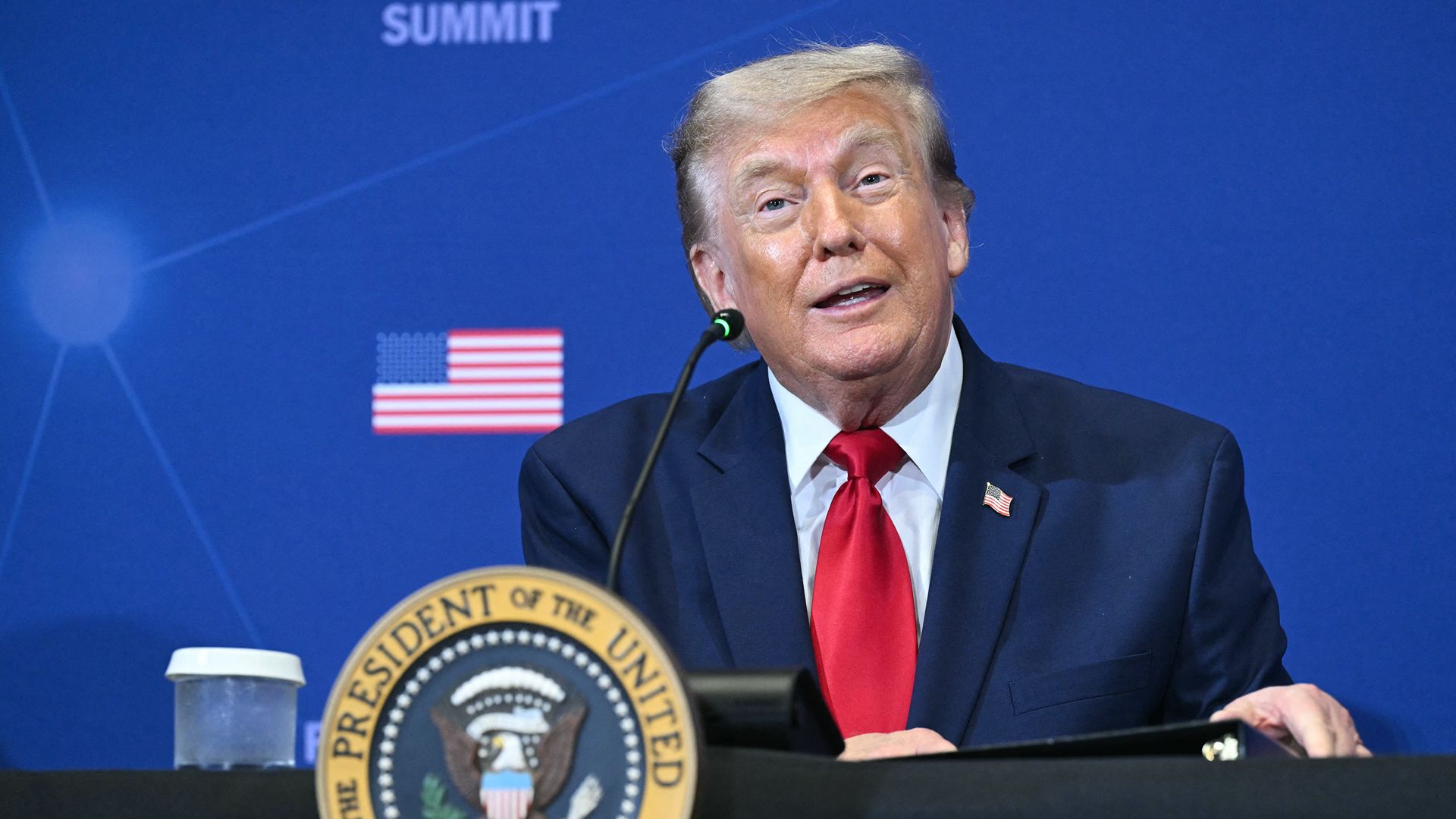
Despite sharply criticizing the White House's latest actions, the Canadian government has continued to signal that it prefers negotiations over further escalation. Carney said Ottawa has already presented proposals aimed at modernizing CUSMA while attempting to resolve outstanding commercial disputes through dialogue rather than retaliation. He stressed that Canada remains committed to preserving one of the world's largest trading relationships despite the increasingly confrontational rhetoric coming from Washington. In his statement, Carney said: «Canada stands ready to engage intensively to address outstanding issues with the U.S. to the mutual benefit of our citizens. In all circumstances, Canada will work relentlessly and take any measures necessary to build our strength at home and to support Canadian workers, farmers, businesses, and families.» At the same time, scientists and forestry experts have expressed disbelief at the suggestion that tariffs could somehow address smoke generated by wind patterns and naturally occurring megafires, arguing that the proposal shifts attention away from the environmental factors driving increasingly severe wildfire seasons across North America.
«We are holding Canada responsible for the fact that they are not properly maintaining their Forests, and Brush therein, and the United States is being unnecessarily invaded by filthy, polluted, and unhealthy air, the quality of which is dangerous, and totally unacceptable!»
-U.S. President, Donald Trump on Truth Social
The controversy surrounding Trump's “Border Air Filter” post illustrates how rapidly an environmental disaster has evolved into another front in the growing political and economic confrontation between Washington and Ottawa. Republican lawmakers have echoed many of the president's criticisms, with some calling for additional financial penalties and even visa restrictions targeting Canadian officials as the dispute intensifies. Meanwhile, the administration continues to insist that its tariff strategy is designed to protect American workers and manufacturers rather than punish Canada, framing the measures as part of Trump's broader America First trade agenda. Whether the wildfire smoke ultimately influences future trade policy remains uncertain, but the episode has already deepened tensions between two long-standing allies. As smoke continues to drift across parts of North America and negotiations over CUSMA remain unresolved, the dispute has become an unusual example of how environmental emergencies can quickly intersect with international diplomacy, domestic politics and economic policy.
Created by humans, assisted by AI.
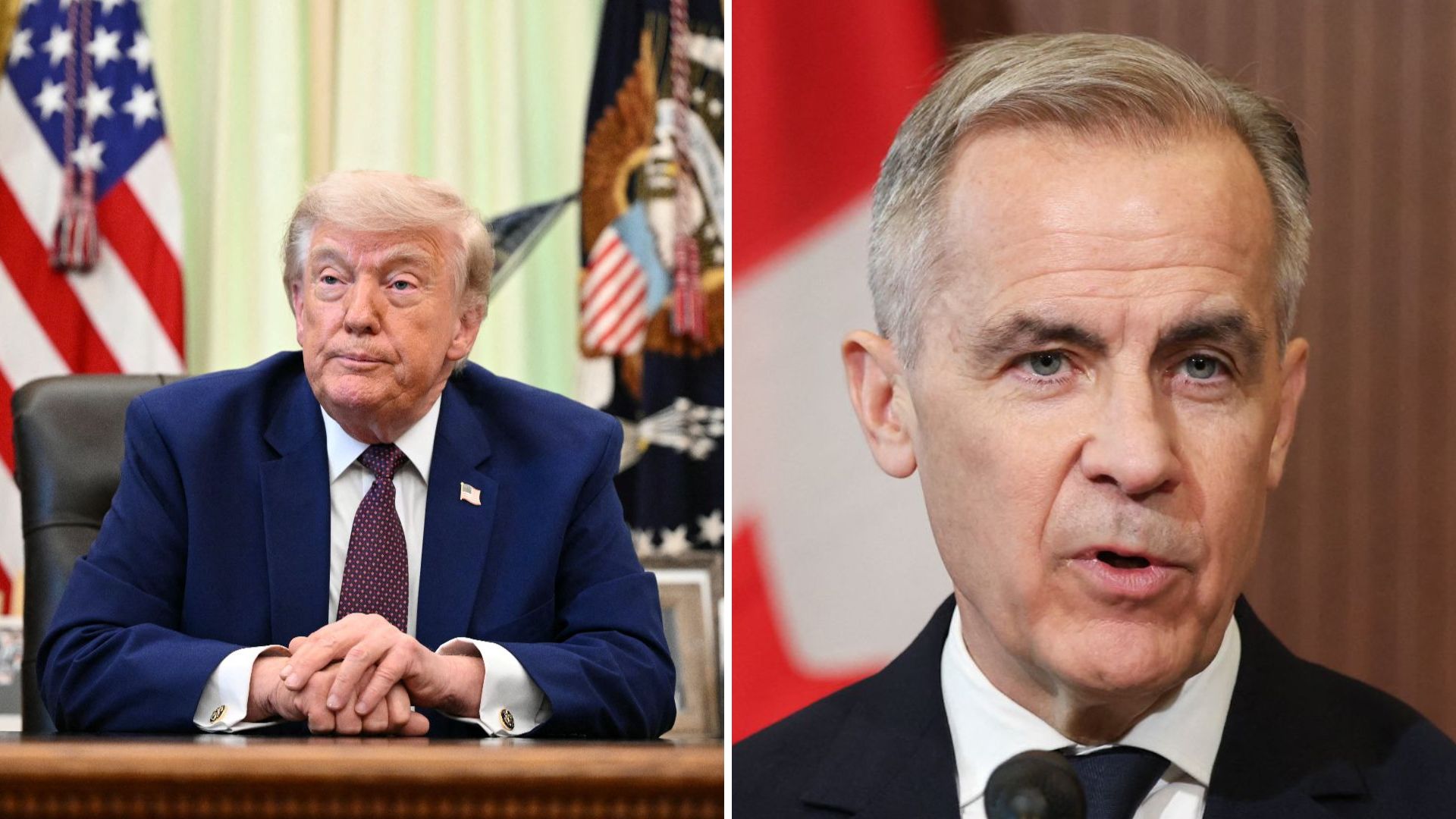 Trump hits Canada with 50% tariffs, accuses Ottawa of “discriminatory treatment” days after wildfire smoke threats
 Trump blames Canada for toxic wildfire smoke, threatens Carney during World Cup