Trump Wants to Turn His Massive Triumphal Arch Into a «Top Grade Military Complex» With Drones and Snipers


/https%3A%2F%2Fcdn-tor.buminteractif.com%2F2026%2F09%2F21142729%2Ftrump-arch-getty-345345dfgdf45345.jpg)
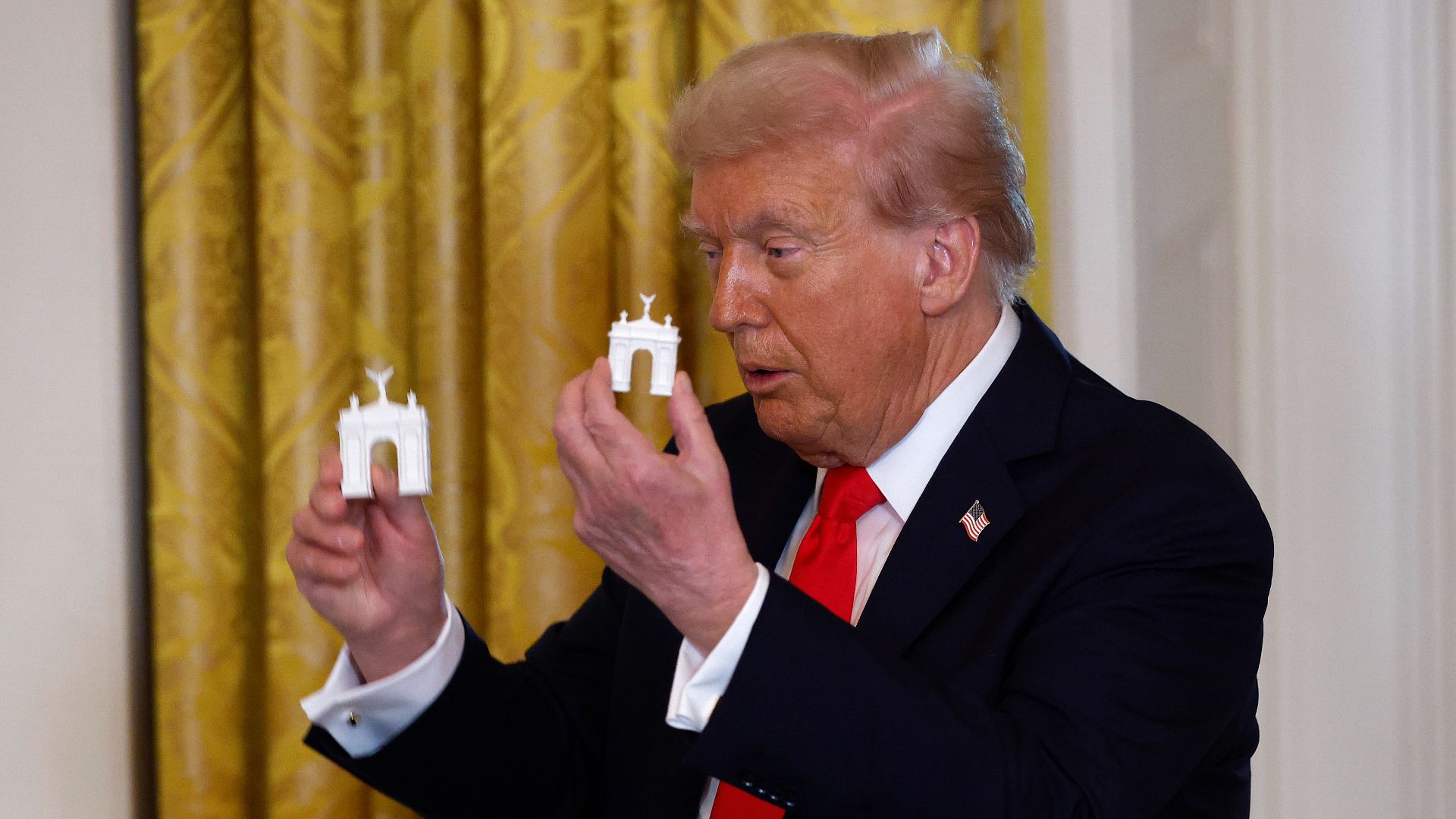
Donald Trump announced a dramatic new purpose for his proposed 250-foot Triumphal Arch in Washington, D.C., saying the monumental structure originally conceived to commemorate the nation's 250th anniversary would also become a military complex capable of housing drones, snipers and ammunition. The planned structure at Memorial Circle, between the Lincoln Memorial and Arlington National Cemetery, was already facing legal challenges and intense public opposition over its enormous scale, its effect on one of Washington's historic sightlines and potential aviation concerns because of its proximity to Ronald Reagan Washington National Airport. Now, Trump's decision to add an active national-security function to the project has opened an entirely new front in the controversy, raising questions about how military operations would coexist with a ceremonial monument located in a heavily traveled public area. The Pentagon, however, has not publicly explained the military rationale behind the proposal, saying it had no information to add beyond Trump's announcement.
Trump unveiled the military component in an extraordinary Truth Social post, saying the change came «At the strong request of the United States Military, and for National Security purposes». He said he had agreed to transform the planned monument «into a top grade Military Complex/Triumphal Arch» and described capabilities extending well beyond the arch's original commemorative purpose. According to Trump, the facility would «house, store, and have the rapid ability to use large numbers of drones», while also accommodating «Snipers, on both the roof and plaza areas». The president added that the complex would «have and hold large quantities of sniper ammunition in storage.» Trump portrayed the proposal as unprecedented, declaring, «There will be no facility like this anywhere in the World.» He then returned to his long-standing argument that Washington lacks the kind of monumental arch found in other major capitals, writing, «Washington, D.C., IS THE ONLY ONE IN THE WORLD THAT DOES NOT HAVE A TRIUMPHAL ARCH, but it will now and, by far, the greatest of them all!»
«At the strong request of the United States Military, and for National Security purposes, I have agreed to convert the magnificent Triumphal Arch, planned since the Civil War Era many years ago, at the Receptive Circle adjoining the Arlington Memorial Bridge, into a top grade Military Complex/Triumphal Arch, to house, store, and have the rapid ability to use large numbers of drones, plus Snipers, on both the roof and plaza areas, and additionally have and hold large quantities of sniper ammunition in storage.»
-U.S. President, Donald Trump on Truth Social
The sudden military designation is particularly significant because it arrives while the arch remains entangled in an unresolved legal fight over whether Trump can build it without explicit authorization from Congress. Public Citizen filed a lawsuit in February on behalf of Vietnam War veterans Michael Lemmon, Shaun Byrnes and Jon Gundersen, along with architectural historian Calder Loth, arguing that federal law prevents the administration from proceeding with the monument without congressional approval. The plaintiffs also contend that the towering structure would disrupt the historically significant visual connection linking the Lincoln Memorial, Arlington Memorial Bridge, Arlington National Cemetery and Arlington House. In August, a National Park Service review similarly concluded that the project would have «adverse effects» on historic properties in the area. Attorneys challenging the project have since rejected Trump's newly announced national-security rationale, with Nicolas Sansone arguing that it does not resolve what the plaintiffs consider the underlying statutory problem. The timing has also attracted scrutiny because the administration recently relied on national-security arguments in defending Trump's White House ballroom project before the Supreme Court. The Court allowed that construction to continue on August 31 in a 5-4 decision, but the ruling did not definitively decide whether the project itself was lawful.
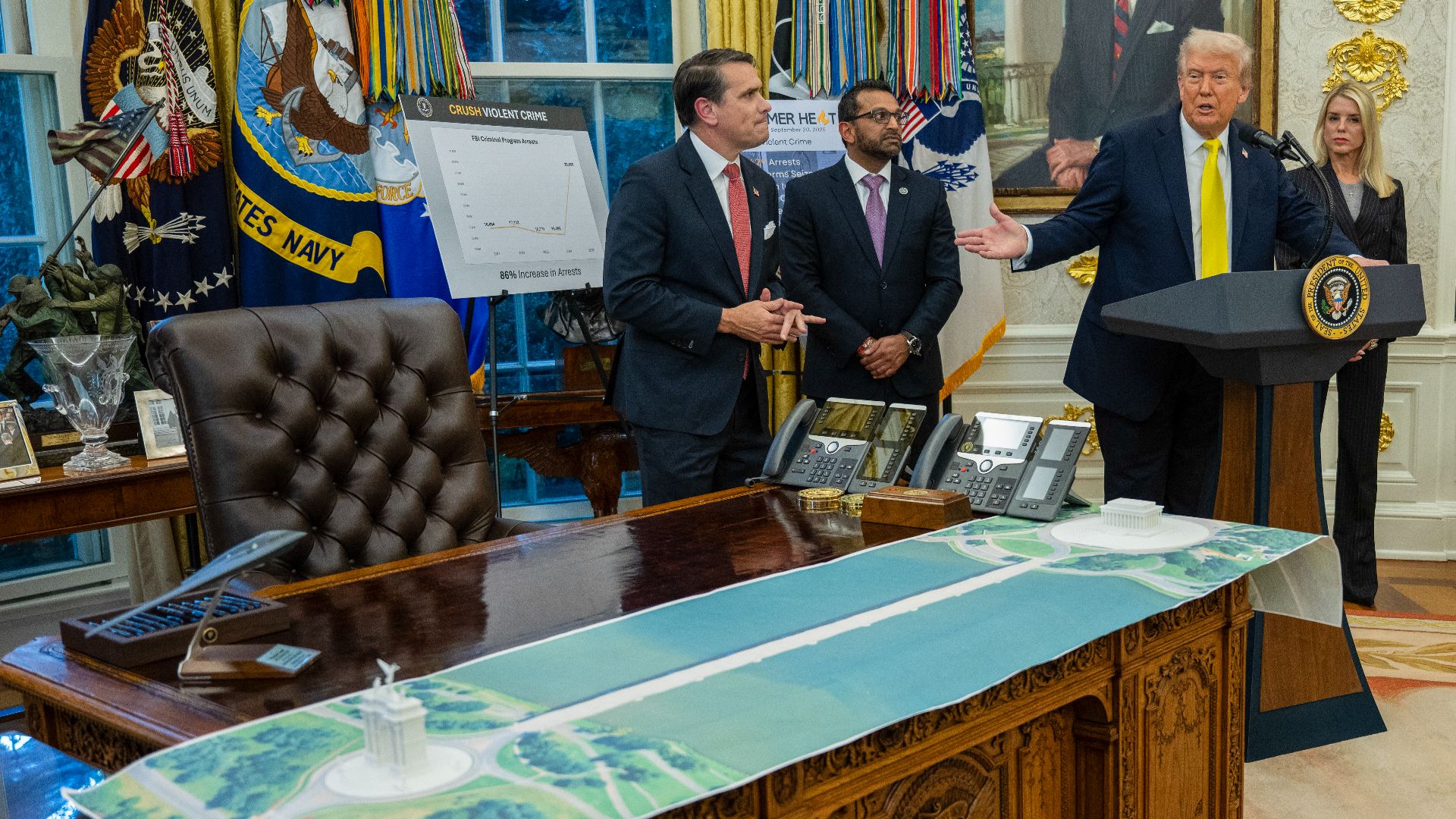
The similarities between the arch and Trump's White House ballroom fight have fueled accusations from opponents that the newly announced military mission is intended to strengthen the administration's position in court. Trump previously described the ballroom as a national-security project, saying a military complex would operate beneath the structure, an argument his administration invoked while defending construction against a legal challenge. The Supreme Court subsequently allowed ballroom construction to continue while the litigation proceeds. Critics now see echoes of that strategy in the arch dispute. Rep. Don Beyer, a Virginia Democrat whose district includes the surrounding area, alleged that Trump «clearly expects to lose a lawsuit and therefore wants to set up a pretext to argue that the arch is tied to national security.» Lawyers representing the veterans have made a similar argument, although the administration has not publicly said that the military redesign is connected to the lawsuit. Nicolas Sansone, an attorney for the plaintiffs, said Trump's new national-security justification «does nothing to cure its fundamental illegality», maintaining that Congress still has not authorized construction.
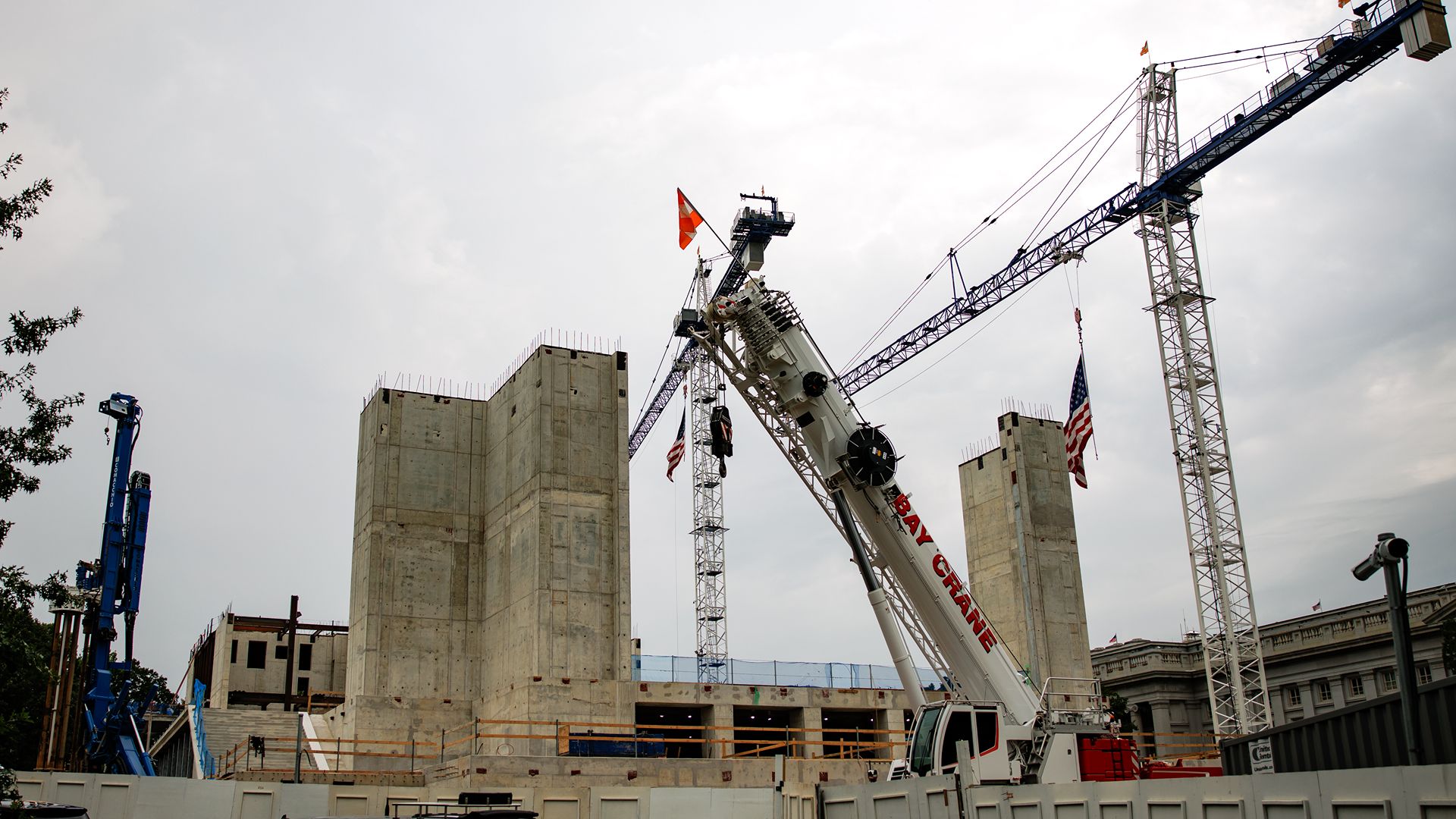
Beyond the legal battle, Trump's plan is generating new questions about the practicality and safety of operating drones and positioning snipers at Memorial Circle, a heavily traveled location close to major military installations and Ronald Reagan Washington National Airport. Beyer called the proposed drone component «a stupid, dangerous, and unworkable idea», arguing that it would place a drone launching site directly in DCA's landing path. The Federal Aviation Administration reached a different conclusion about the monument itself, determining after an aeronautical review that the 250-foot structure would not constitute a hazard to aircraft. However, that assessment concerned the physical arch and came before Trump publicly announced its proposed use as a drone and sniper facility. The FAA also imposed unusual visibility requirements for the structure, including continuous floodlighting and «a non-standard eternal flame» at its summit to help make it noticeable to pilots. Meanwhile, the Pentagon has offered no detailed public explanation of why a new military installation would be required at Memorial Circle, despite Trump saying the conversion came at the military's «strong request.»
«There will be no facility like this anywhere in the World. Out of the 59 top cities and Capitals, Washington, D.C., IS THE ONLY ONE IN THE WORLD THAT DOES NOT HAVE A TRIUMPHAL ARCH, but it will now and, by far, the greatest of them all!»
-U.S. President, Donald Trump on Truth Social
The military announcement also does little to settle the broader dispute over what the enormous arch would do to one of Washington's most historically significant landscapes. A National Park Service review acknowledged that the 250-foot monument would produce «adverse effects» on historic properties and alter the carefully designed visual relationship connecting Arlington House, Arlington National Cemetery, Arlington Memorial Bridge and the Lincoln Memorial. The Park Service nevertheless concluded that Memorial Circle remains the historically appropriate location and that moving the monument elsewhere would undermine the project's stated commemorative purpose. More than 100,000 public comments were submitted during the federal review process, while the lawsuit brought by three Vietnam War veterans and architectural historian Calder Loth remains pending. Judge Tanya Chutkan has required the government to provide notice before undertaking construction-related activity beyond authorized archaeological work. The arch has received early approval from the Commission of Fine Arts and preliminary approval for its site and plans from the National Capital Planning Commission, but further federal review remains underway. What began as Trump's monumental tribute to America's 250th anniversary has therefore evolved into something substantially different: a proposed 250-foot landmark that the president now says would simultaneously serve as a tourist monument, observation structure and operational military facility stocked with drones, snipers and ammunition.
Created by humans, assisted by AI.
 US military confirms weapons in space as it prepares for threats «wherever they exist»
 Trump moves forward with one of largest US bomb deliveries to Israel in $2.8 billion arms deal