Christa Pike Still Alive After Two Lethal Injection Doses as Tennessee Halts Next Execution and Launches Investigation


/https%3A%2F%2Fcdn-tor.buminteractif.com%2F2026%2F10%2F01145145%2FTennessee-Department-of-Correction4352345345.jpg)
On September 30, Tennessee failed to execute Christa Gail Pike after prison officials administered two doses of pentobarbital but were unable to carry out her death sentence, leaving the 50-year-old inmate alive and ultimately requiring her transfer by ambulance to an off-site hospital. The extraordinary failure immediately prompted Governor Bill Lee to halt Tennessee's only remaining execution scheduled for 2026 and order an independent, third-party investigation into what happened inside the execution chamber. Pike had been scheduled to become the first woman executed by Tennessee in more than 200 years after the U.S. Supreme Court cleared the state to proceed following hours of last-minute legal challenges. Instead, an execution intended to end her three-decade stay on death row exposed a significant gap in Tennessee's lethal-injection procedures: the protocol provides for a second set of drug syringes if the first does not cause death, but does not specify what officials should do if the inmate remains alive after the backup dose.
Inside Riverbend Maximum Security Institution in Nashville, media witnesses watched Pike strapped to a gurney as the execution began Wednesday evening. She initially remained awake and at one point lifted her head and questioned officials about what she was feeling in her arm. Witnesses later reported that a second dose of pentobarbital had been administered by approximately 8:26 p.m., after the first had failed to complete the execution. Yet Pike still did not die. She could subsequently be heard loudly snoring from behind the closed execution chamber curtain, with the sound continuing until officials cut the microphone shortly before 9 p.m. Pike's attorneys filed emergency motions seeking to stop the procedure, arguing that she was experiencing «unnecessary agony» and that continuing would violate constitutional protections against cruel and unusual punishment. Media witnesses were eventually escorted away, while Pike was transported from the prison by ambulance and admitted to a hospital for treatment.
«The Tennessee Department of Correction followed every step of the State's lawful, established execution protocol approved by the Attorney General's Office. The lethal injection chemical in the protocol has consistently been effective, and the protocol does not allow for additional procedures beyond what was carried out this evening. Christa Pike has been transported to an off-site medical facility.»
-Tennessee Department of Correction
The unprecedented outcome forced Tennessee officials to confront questions their own execution protocol apparently did not anticipate. The Tennessee Department of Correction defended its actions, stating: «The Tennessee Department of Correction followed every step of the State's lawful, established execution protocol approved by the Attorney General's Office. The lethal injection chemical in the protocol has consistently been effective, and the protocol does not allow for additional procedures beyond what was carried out this evening. Christa Pike has been transported to an off-site medical facility.» Lee responded by ordering what he described as «a comprehensive, third-party review to determine exactly what occurred» and postponing the state's remaining execution of the year. «Carrying out a lawfully imposed sentence is among the State's most serious responsibilities, and the people of Tennessee expect it to be done in a manner that is not only legal and constitutional, but is effective.» The decision means the execution that had been scheduled later this year will not proceed as planned while Tennessee examines how two rounds of its designated lethal drug failed to complete Pike's sentence.
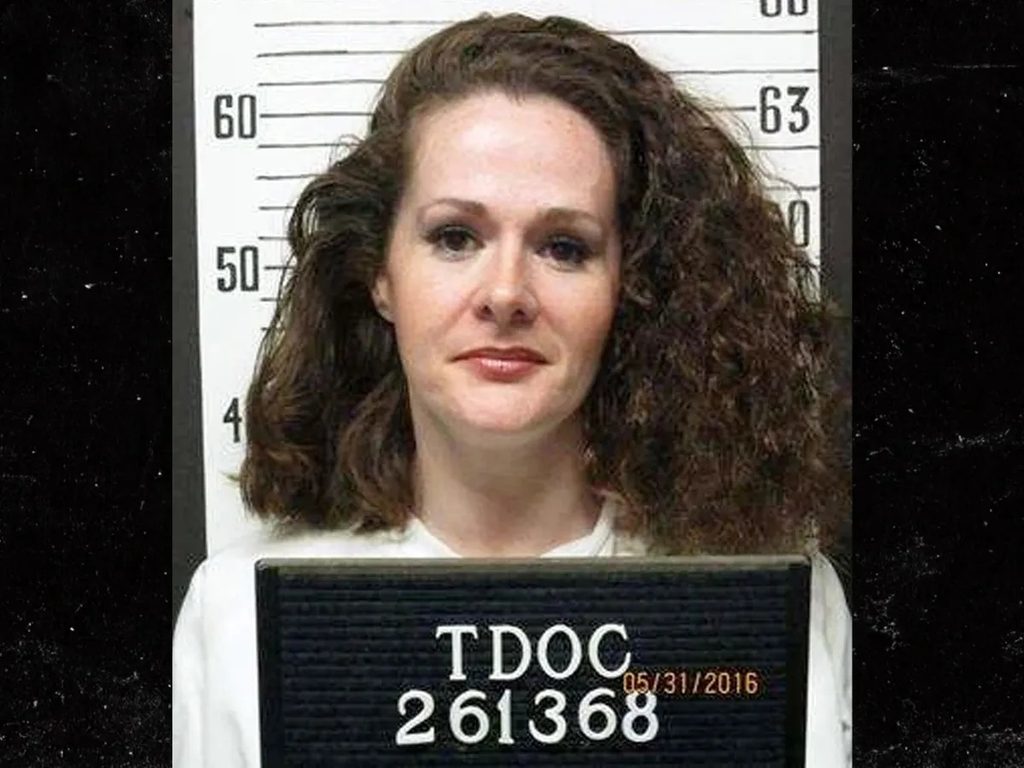
The execution failure came more than three decades after the crime that placed Pike on Tennessee's death row. In January 1995, when Pike was 18, she and her boyfriend, Tadaryl Shipp, were involved in the killing of 19-year-old Colleen Slemmer, a fellow student at the Knoxville Job Corps. Prosecutors said Pike believed Slemmer was a romantic rival and lured her to an isolated wooded area, where Slemmer was subjected to a prolonged and brutal attack. Pike cut her with a box cutter and struck her with a large piece of asphalt, while Shipp later acknowledged carving a pentagram into Slemmer's body. Pike was convicted of first-degree murder and sentenced to death, while Shipp, who was 17 at the time and therefore not eligible for the death penalty, received life in prison with the possibility of parole. Pike never denied her role in the killing, although her attorneys later argued that her age, mental illness and history of severe childhood abuse should have weighed more heavily against a death sentence.

Pike's survival is especially significant because Tennessee had already experienced another unsuccessful execution attempt only months earlier. In May, officials abandoned the lethal injection of Tony Carruthers after spending more than an hour unsuccessfully trying to establish an intravenous line through which pentobarbital could be administered. Pike's case went considerably further: according to her attorneys, the drug actually entered her system twice, yet she remained alive. Robin M. Maher, executive director of the Death Penalty Information Center, described what happened as «singular and unparalleled», noting that other prisoners have survived execution attempts because officials could not establish IV access, but not after receiving the drugs intended to cause death. The episode also follows Tennessee's 2024 decision to replace its previous three-drug lethal-injection procedure with a single-drug pentobarbital protocol, a change adopted after earlier problems with the state's execution system. With two executions now failing in the same year for different reasons, the latest incident has renewed scrutiny of whether Tennessee can reliably carry out lethal injections under its current procedures.
«Carrying out a lawfully imposed sentence is among the State's most serious responsibilities, and the people of Tennessee expect it to be done in a manner that is not only legal and constitutional, but is effective.»
-Governor Bill Lee
For now, the consequences extend beyond Pike herself. Lee's intervention means Tennessee's only remaining execution scheduled for 2026 will not take place this year while the state examines exactly how an inmate could remain alive after both the primary and backup doses required under its protocol. The episode has also renewed a broader debate surrounding lethal injection, particularly because state officials maintain that every authorized step was followed. Pike would have been the 30th person executed in the United States this year and Tennessee's first woman put to death since 1820. Nationwide, executions of women remain exceptionally rare: only 18 women have been executed in the United States since the Supreme Court allowed capital punishment to resume in 1976, representing roughly 1% of executions. Instead of becoming the latest name on that list, Pike was taken from the execution chamber to a hospital, while Tennessee was left investigating why a procedure designed to end in death failed even after its final backup dose had been administered.

Created by humans, assisted by AI.
 Trump plans 17,500 refugee admissions for 2027 — with most spots going to white South Africans
 Trump threatens to «annihilate» Islamic Republic and says Cuba «will fall» as Iranian and Cuban delegates walk out at UN