AI Boom Faces $10 Trillion Reality Check as Analysts Question 65% of Planned U.S. Data Centers


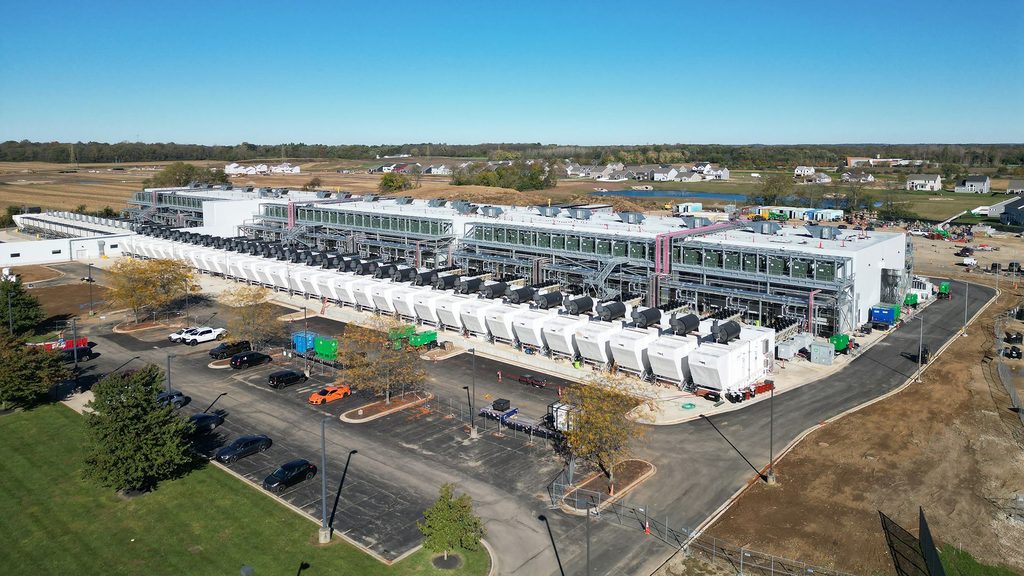
America's $10 trillion AI infrastructure boom is confronting a growing reality check as new estimates suggest that 65% of planned U.S. data center projects may not be realistically achievable, raising fresh concerns about an investment frenzy increasingly compared to a financial bubble. According to an investigation published by the Financial Times on October 18, analysts at Bernstein believe only 35% of the country's proposed data center pipeline is credible, while at least 47 major projects have already been delayed, withdrawn or blocked in 2026. More than 1,000 American communities have also pushed for restrictions on new facilities, reflecting growing resistance to their enormous electricity requirements, water consumption and potential financial consequences for local residents. The findings cast doubt on the industry's ability to deliver the computing infrastructure underpinning its ambitious expansion plans, with projections suggesting that U.S. investment could exceed $10 trillion between 2025 and 2032. The revelations arrive as AI-related stocks experience sharp losses, corporate borrowing costs rise and investors begin questioning whether the sector's extraordinary spending commitments can generate sufficient returns.
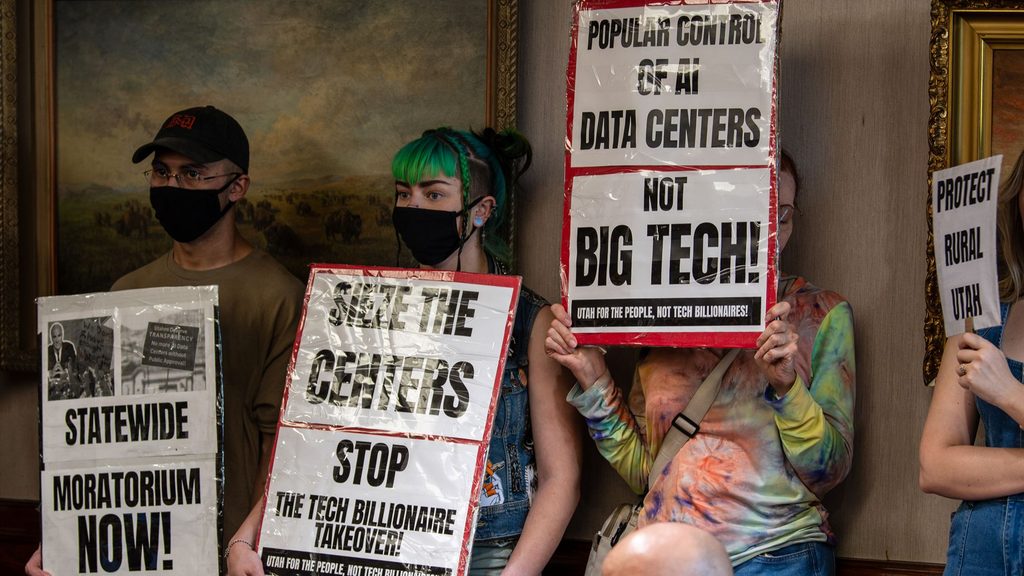
The difficulties extend far beyond financial markets, with proposed AI facilities increasingly encountering resistance from communities concerned about environmental damage, rising utility bills and the allocation of public resources to some of the world's wealthiest technology companies. Local governments across the United States are confronting disputes over zoning approvals, tax incentives and the substantial demands that data centers place on already strained electricity grids. In several regions, residents have organized opposition campaigns or sought temporary construction restrictions, while developers struggle with lengthy grid-connection queues and shortages of specialized equipment, including transformers and advanced cooling systems. These obstacles can delay projects for years, increasing construction costs and complicating agreements with customers expecting access to computing capacity on fixed schedules. The Financial Times findings suggest that the gap between announced developments and realistically deliverable facilities is becoming one of the industry's most significant challenges. Even projects with substantial financial backing can face uncertain timelines if utilities cannot guarantee the necessary power supply. For investors, this creates an uncomfortable possibility: billions of dollars could remain committed to infrastructure that cannot begin generating revenue when originally anticipated.
$35 billion in debt
The growing uncertainty surrounding AI infrastructure has also exposed the financial vulnerabilities of companies relying heavily on borrowed money to finance rapid expansion, with CoreWeave emerging as one of Wall Street's most closely watched warning signs. The Nvidia-backed cloud computing provider experienced a sharp selloff in both its shares and corporate bonds during the week of October 12, as investors reassessed the risks associated with its enormous construction commitments and mounting debt burden. Yields on some CoreWeave bonds climbed toward 16%, compared with borrowing rates below 10% when the securities were originally issued, reflecting a substantial deterioration in investor confidence. The company reported approximately $35 billion in debt at the end of June, alongside billions more in lease-related obligations, while continuing to invest heavily in facilities designed to serve AI developers. Although CoreWeave maintains a substantial backlog of contracted revenue and has defended the strength of its business model, analysts warn that expensive refinancing could undermine profitability if customer payments fail to keep pace with capital requirements. The turbulence has spread beyond CoreWeave, intensifying scrutiny of other emerging cloud providers and raising broader questions about whether debt-financed AI expansion can withstand a prolonged period of elevated interest rates.

The mounting challenges are now reaching some of the industry's most ambitious projects, including OpenAI's Stargate initiative and Microsoft's expanding network of AI data centers. Stargate, promoted as a massive infrastructure investment involving OpenAI, Oracle and SoftBank, has encountered questions about financing, construction schedules and the coordination required to deliver its promised computing capacity. Although its backers continue to pursue expansion, the difficulties illustrate how even projects supported by major technology companies remain vulnerable to delays and rising costs. Meanwhile, Microsoft has withdrawn from a major data center project involving Nscale in Loughton, Essex, after uncertainty over electricity availability threatened to push the facility's operational timeline into the 2030s. The decision, reported on October 18, underscores an increasingly significant constraint on the AI industry's expansion: access to reliable power cannot necessarily keep pace with the speed at which companies announce new investments. Microsoft continues to pursue other infrastructure partnerships, but the abandoned arrangement highlights the growing difference between financial commitments and the practical ability to deliver operational computing facilities.
The infrastructure setbacks are unfolding alongside a broader reassessment of AI investments on Wall Street, where investors have begun questioning whether the industry's unprecedented spending can be justified by future revenue. During the week ending October 16, technology stocks suffered substantial losses, with the Philadelphia Semiconductor Index reportedly falling approximately 10% as concerns about excessive valuations and debt-financed expansion intensified. The selloff affected companies across the AI supply chain, including semiconductor manufacturers, cloud infrastructure providers and businesses dependent on continued construction of new computing facilities. At the center of the debate is the growing gap between the enormous amount of capital being committed to AI infrastructure and the revenue needed to support those investments over time. Major technology companies have pledged hundreds of billions of dollars toward new facilities, advanced processors and electricity-intensive computing operations, even as questions persist about how quickly AI services will generate sustainable profits. Investors are also examining long-term leasing agreements, financing arrangements and the potential consequences of delays that could postpone expected revenue while interest expenses continue accumulating. Although demand for AI computing remains substantial, the recent market turbulence suggests that investors are becoming less willing to assume that every announced expansion will translate into a profitable business.
An investment boom
The next major test for America's AI infrastructure boom will be whether the industry's largest companies can demonstrate that their extraordinary construction spending is producing measurable financial returns rather than simply expanding capacity faster than demand can justify. Upcoming earnings reports from Microsoft, Amazon, Alphabet and Meta are expected to attract particular attention as investors examine capital expenditures, cloud computing revenue, operating margins and the growing costs of supporting AI services. Analysts will also be watching whether developers begin postponing additional facilities, renegotiating contracts or concentrating their investments on projects with guaranteed electricity supplies and established customers. A slowdown would not necessarily mean that AI technology itself has failed, since demand for computing power could continue growing even as individual infrastructure projects become financially or technically unworkable. However, the combination of expensive borrowing, strained power grids, local opposition and uncertain returns raises the possibility that the industry's expansion will prove considerably smaller than its original projections. For an investment boom built on expectations of seemingly unlimited growth, the increasingly difficult question is no longer simply how much infrastructure companies are willing to finance, but how much can realistically be constructed, operated and made profitable.
Created by humans, assisted by AI.
 Global AI stocks plunge as $1.6 trillion is wiped out and CoreWeave debt yields top 16%, fueling bubble fears
 FBI arrests OpenAI engineer after multiple secret recording devices found at company headquarters
