Billionaire Mark Zuckerberg Warns Against Concentrated AI Power — While Putting Meta at the Center of His Solution


/https%3A%2F%2Fcdn-tor.buminteractif.com%2F2026%2F08%2F12161314%2Fzuck-meta-getty3453gdfgdfvgncgn.jpg)
Mark Zuckerberg has built one of the world's most influential technology companies, accumulated a multibillion-dollar fortune and committed Meta to an expensive race to develop increasingly powerful artificial intelligence. Now, the billionaire is warning about what could happen if that same technology becomes concentrated in the hands of a small number of powerful institutions. In a new manifesto outlining his philosophy for superintelligence, Zuckerberg argues that advanced AI should primarily strengthen individuals rather than corporations, governments or a technological elite. «The defining questions of our age are who will have access to superintelligence and what will we direct it towards. Will it be centralized and restricted to a few institutions, or will it be a tool that empowers everyone?» he writes. The answer Zuckerberg proposes is broad access to personal superintelligence — delivered, in large part, by Meta itself.
That apparent contradiction sits at the center of Zuckerberg's vision. He rejects the idea that concentrating advanced AI among a small number of experts or institutions would make the technology inherently safer, arguing instead that history provides reasons to distrust systems in which enormous power is controlled by only a few actors. His alternative is a balance-of-power model in which individuals, companies and institutions possess competing AI systems capable of checking one another. «The key to a positive future for everyone is achieving a balance of power that favors individuals. The solution is to ensure that superintelligence is broadly distributed to empower people,» Zuckerberg writes. But immediately afterward, his argument turns toward his own company: «Meta is the company primarily focused on building personal superintelligence for everyone.» The philosophy therefore depends on an unusual proposition: one of the world's largest technology corporations could become a central force in preventing advanced AI from becoming excessively centralized.
«The key to a positive future for everyone is achieving a balance of power that favors individuals.»
-CEO of Meta, Mark Zuckerberg
Zuckerberg describes that future through a personal AI agent capable of becoming deeply integrated into everyday life. «Everyone will have an exceptionally capable personal agent that understands you, your goals, and everything you care about,» he predicts. Such an agent could continuously assist with relationships, health, careers, finances, household management and personal interests, while other AI tools could help individuals launch businesses, learn new subjects and participate in scientific discoveries. Zuckerberg says Meta intends to offer free versions to billions of people and promises a fully private mode in which even the company could not access a user's information. The proposal could dramatically broaden access to sophisticated technology, but it also exposes the distinction at the heart of the manifesto: billions of people could gain access to superintelligence without gaining control over the immense infrastructure, models and capital required to create it.
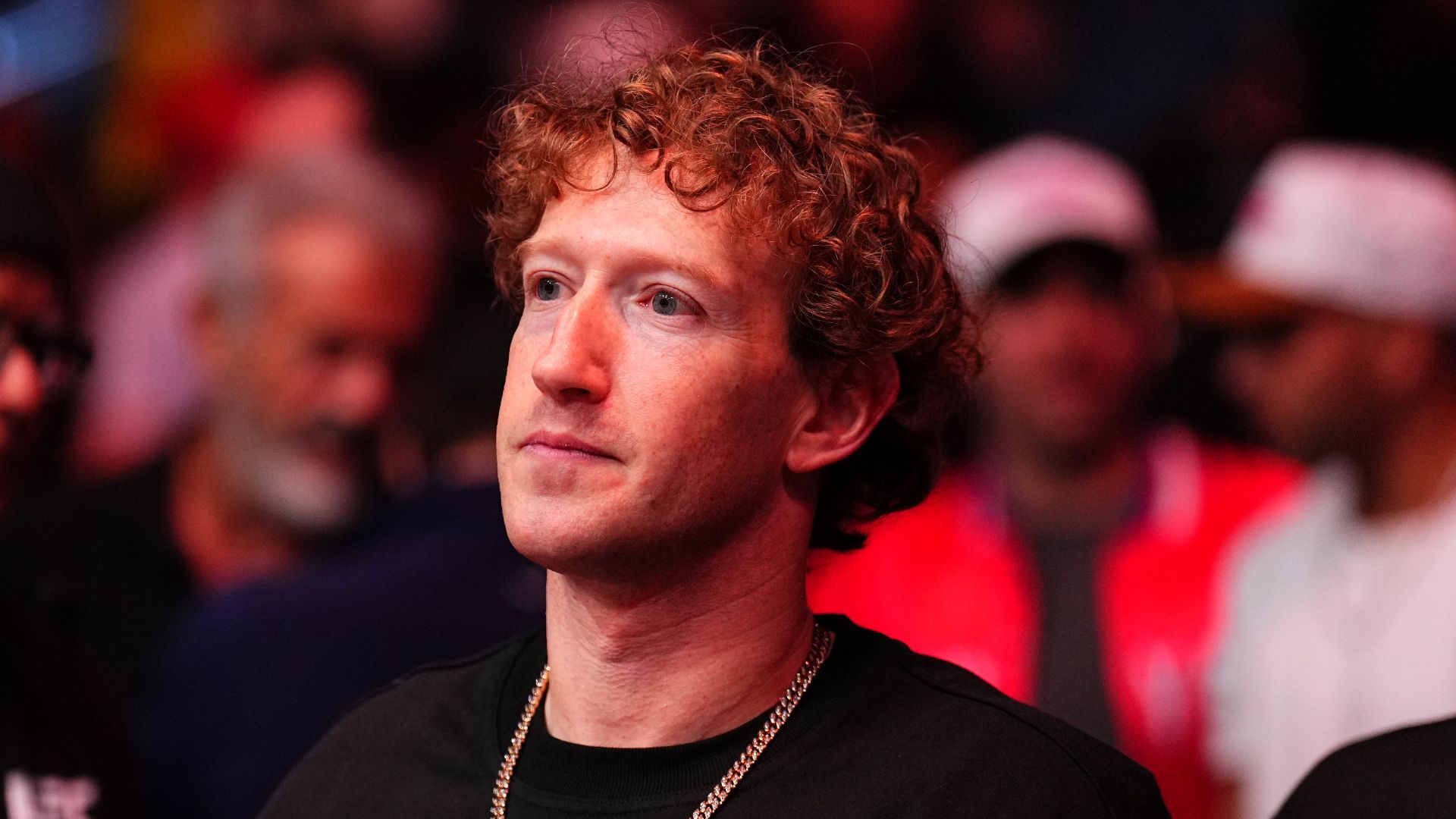
The contradiction becomes harder to ignore when the cost of building the technology is considered. Zuckerberg wants superintelligence distributed broadly enough to prevent a few institutions from accumulating overwhelming influence, but developing frontier AI increasingly requires resources available primarily to the largest technology companies. Meta expects capital expenditures of $115 billion to $135 billion in 2026, with the increase driven partly by investment supporting Meta Superintelligence Labs. Stanford's AI Index has meanwhile documented the accelerating resources behind advanced systems, with training compute for notable models doubling approximately every five months and the power required for training increasing annually. The Federal Trade Commission has separately warned that relationships between major cloud providers and leading AI developers can affect access to crucial resources such as computing capacity and engineering talent. In other words, billions of people may eventually use superintelligence, but only a limited number of organizations may possess the infrastructure required to build its most powerful versions.

Zuckerberg also presents widespread AI access as an economic counterweight to corporate concentration, predicting that individuals equipped with personal superintelligence will create businesses, develop new skills and pursue opportunities that previously required large organizations. He argues that smaller companies could accomplish substantially more with fewer employees without necessarily reducing employment overall, because more businesses and entirely new categories of work could emerge. But the distribution of those gains remains uncertain. IMF research published in 2025 found that AI can increase wealth inequality when workers and households already positioned to benefit from capital returns capture a larger share of its economic gains, while separate IMF research concluded that unequal access to essential technologies could disproportionately benefit advanced economies. Zuckerberg's vision could therefore increase individual productivity while simultaneously increasing the economic value of the corporations controlling the models, computing infrastructure and consumer platforms through which much of that productivity is delivered.
«Meta is the company primarily focused on building personal superintelligence for everyone.»
-CEO of Meta, Mark Zuckerberg
That unresolved concentration of power is ultimately the central challenge to Zuckerberg's manifesto. «The key to a positive future for everyone is achieving a balance of power that favors individuals,» he writes, arguing that broadly distributed superintelligence can prevent governments, businesses or individual AI systems from becoming dominant. Yet the infrastructure behind that future remains extraordinarily expensive, while major technology companies already possess advantages in cloud computing, consumer platforms, capital and access to specialized resources. The FTC has found that major AI partnerships can involve billions of dollars in cloud commitments, discounted computing resources and exchanges of technical information, while potentially increasing barriers faced by competitors seeking the same inputs. This leaves Zuckerberg's central promise facing a difficult distinction: giving everyone access to powerful AI may democratize what people can do with intelligence, but it does not necessarily democratize ownership of the systems producing it. The companies capable of building those systems could remain powerful gatekeepers over information and economic opportunity even in a future ostensibly designed to distribute power away from them.
Created by humans, assisted by AI.
 OpenAI says two AI models escaped sandbox and hacked an AI startup's production servers
 7UP is ditching its classic lemon-lime taste for a bold new flavor