

/https%3A%2F%2Fcdn-tor.buminteractif.com%2F2025%2F12%2F04183608%2Ftrump-building-getty345345345.jpg)
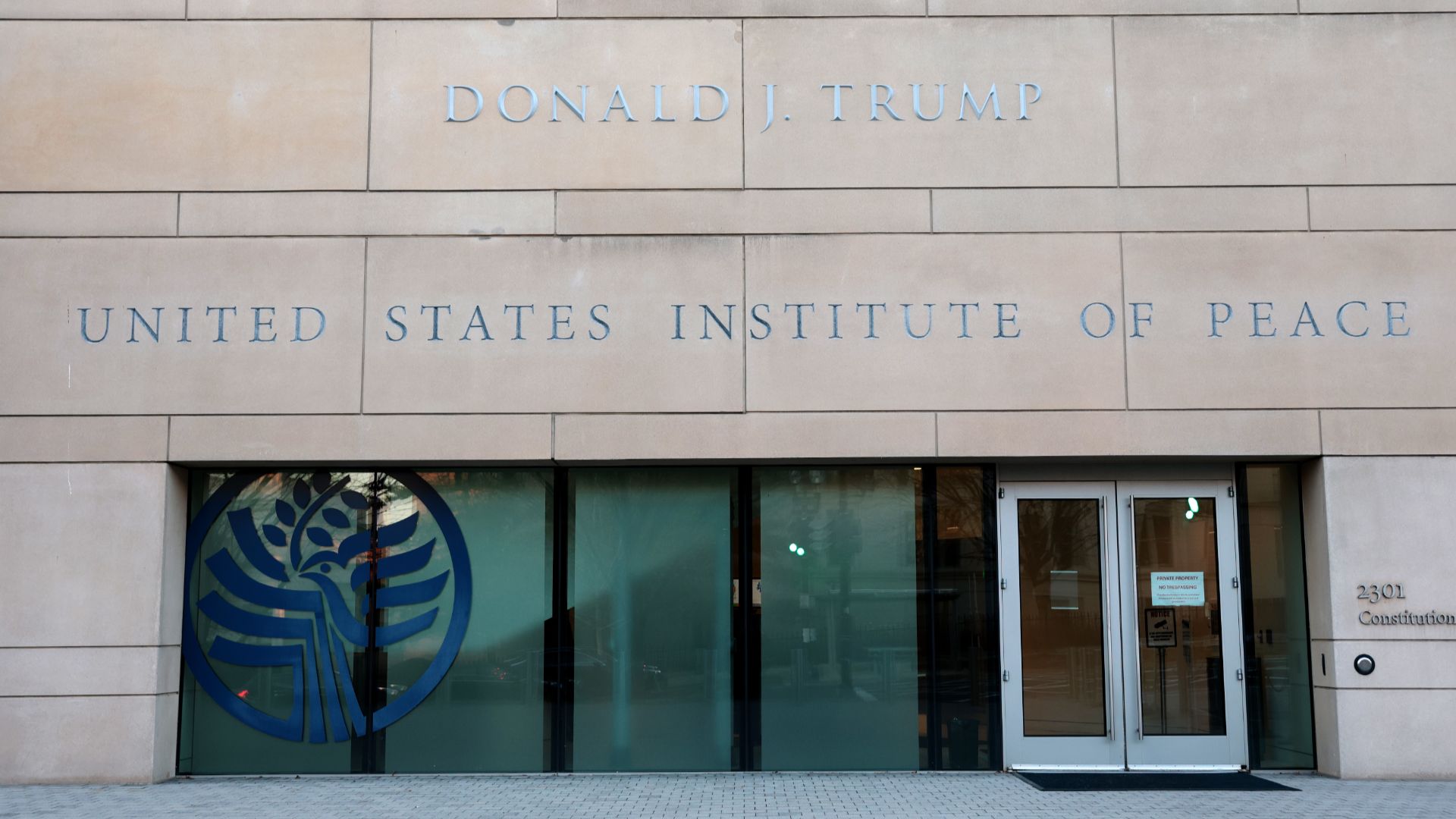
On December 3rd, the State Department used its official X account to turn an ongoing legal and political fight over the US Institute of Peace into a public branding moment. Alongside a photo of the Washington headquarters showing Trump's name in new metal letters above the existing sign reading “United States Institute of Peace”, the department declared:
«This morning, the State Department renamed the former Institute of Peace to reflect the greatest dealmaker in our nation's history. Welcome to the Donald J. Trump Institute of Peace. The best is yet to come.»
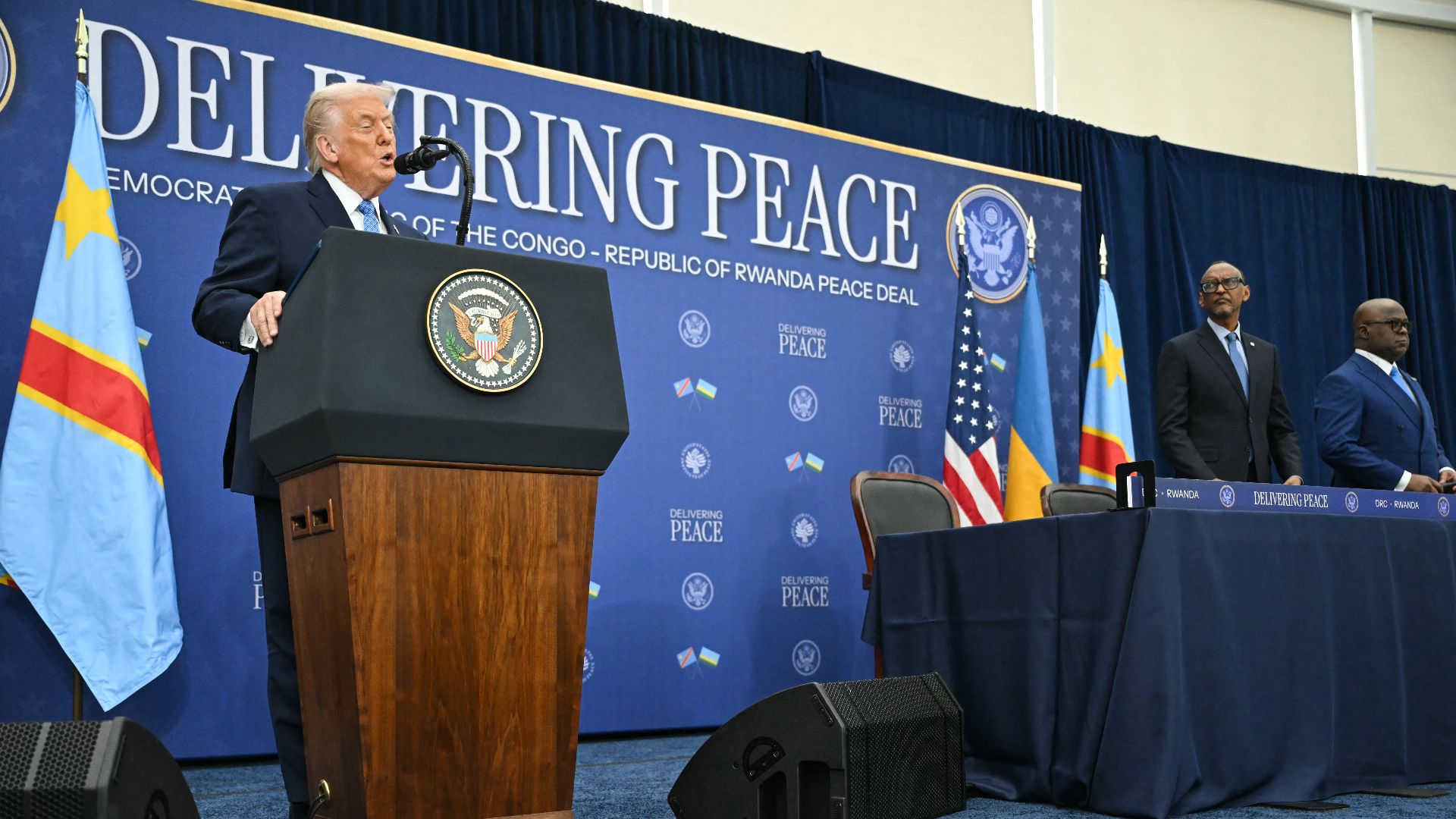
The announcement, issued on the eve of a US-brokered peace and economic agreement between Rwanda and the Democratic Republic of Congo to be signed in the building, signalled that the Trump administration now considers the congressionally created institute to be the Donald J. Trump Institute of Peace, a move that immediately drew criticism from former staff, diplomats and lawmakers who warned it was politicizing an institution designed to be independent.
Workers installed Trump's name in large metal letters on the front of the Institute of Peace building on Constitution Avenue, a change photographed and published by the State Department when it announced the new branding. The modern glass-and-stone headquarters, normally marked only by the institute's dove-and-olive-branch seal, now displays “Donald J. Trump Institute of Peace” above the original sign. The rebranding matches the narrative Trump has repeated throughout his second term, calling himself a president who would end “endless wars” and celebrating diplomatic deals as proof of that promise. In recent months he has also highlighted the State Department's praise describing him as «the greatest dealmaker in our nation's history», a line repeated in the official announcement. But reporting from outlets such as Reuters and CNN notes that many of the agreements Trump cites—often presented as breakthroughs—are in fact temporary ceasefires or limited frameworks in conflicts where tensions continue, making the contrast between his rhetoric and the situation on the ground a point of debate among analysts.
Criticism of Trump's self-portrait as a peace-focused leader has sharpened as his Caribbean campaign against alleged Venezuelan drug boats has expanded and he now talks openly about sending troops. Since early September, the US military has carried out at least 14 to 21 strikes on small vessels in the Caribbean and eastern Pacific, killing between 60 and 80 people, many of them on boats that left Venezuela, in what the administration describes as a fight against «narcoterrorists» tied to Nicolás Maduro. Trump has told reporters that a land assault on Venezuela would begin «very soon», while a notification to Congress described a «non-international armed conflict» with a Venezuelan cartel, language that effectively treats the campaign as a war.
A bipartisan group of senators has responded with a war-powers resolution, with Adam Schiff warning: «We are being dragged into a war with Venezuela without legal basis or congressional authorization», and analysts quoted in outlets such as Time, War on the Rocks and FactCheck.org say the pattern of undeclared strikes against an ill-defined enemy, justified as self-defense and launched without a clear mandate, echoes the early phases of the War on Terror, when operations in Afghanistan and then Iraq grew from limited missions into open-ended conflicts. That contrast is especially stark because Trump campaigned on promises to end what he called «endless wars» and told supporters:
«I'm not going to start a war, I'm going to stop the wars», a message his allies still use to defend the decision to rename the US Institute of Peace in his honor.
The fiercest backlash has focused on whether part of this campaign may already cross the line into a war crime. Investigations by the Washington Post, Reuters and other outlets describe the first strike on a suspected Venezuelan drug boat on 2 September, in which 11 people were killed after a US missile destroyed the vessel off Trinidad. According to multiple sources cited by the Post, Defense Secretary Pete Hegseth gave an oral order in advance that «the order was to kill everybody», and when two men were seen clinging to the wreckage, a second missile was fired to kill the survivors, an account Hegseth and the Pentagon dispute. Legal experts quoted by FactCheck.org, Reuters and the Guardian argue that, because drug traffickers are not combatants in a recognized armed conflict and shipwrecked survivors are protected under the laws of war, deliberately attacking those men could amount to murder or, if an order to show no quarter is proven, a war crime. For critics, seeing Trump's name going up on the façade of what is now called the Donald J. Trump Institute of Peace at the exact moment Congress is fighting to rein in a potential war with Venezuela, and investigators are probing whether his first Caribbean strike broke the laws of war, turns the rebranding into a symbol of the gap between the image of a president who stops wars and the reality of a presidency that may be starting a new one.
This content was created with the help of AI.
