

/https%3A%2F%2Fcdn-tor.buminteractif.com%2F2026%2F09%2F17204111%2FGettyImages-2294567635.jpg)
The yearly United Nations General Assembly will happen September 22 – 28 in New York City, New York, and with that has come a slew of issues and restrictions on Palestinian officials. On September 16, another example was added to the pile when the US announced it would not be granting visas to Palestinian officials attending the UN. Palestine has held non-member status in the UN since 2012, and officials from Palestine have attended every General Assembly since it entered the organization. This US visa ban reflects the ban that was enacted in 2025 to block Palestinian officials from attending last year's General Assembly. In 2025, Palestinian officials were forced to attend the meeting online, and in 2026, the same will be true.
Who was going to attend?
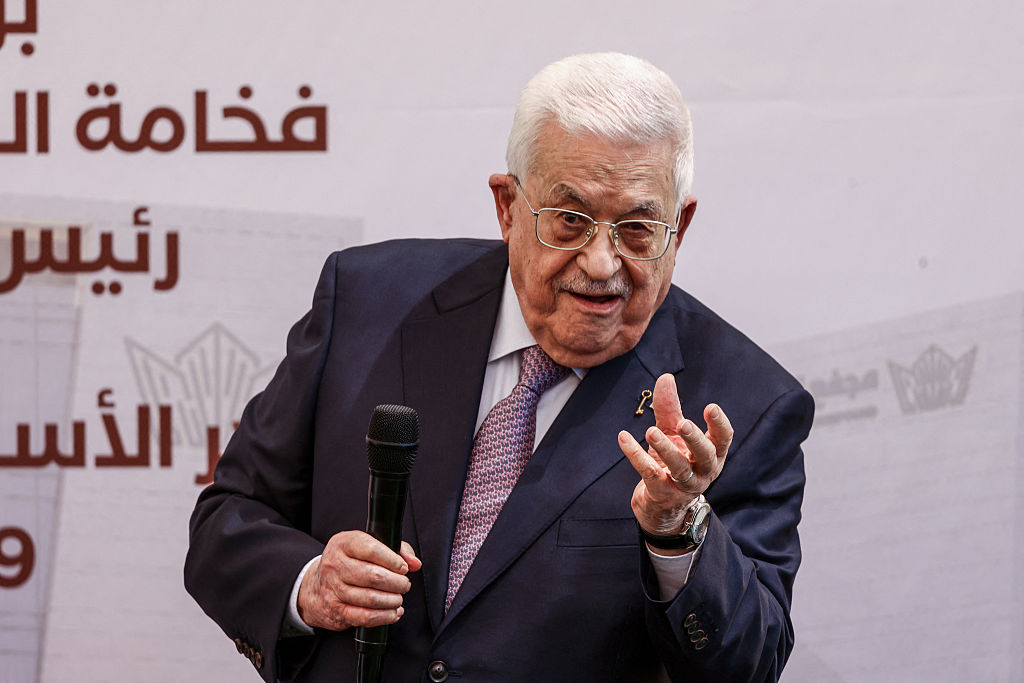
Palestinian Authority President Mahmoud Abbas will be leading the delegation from Palestine, and he will be joined by approximately 80 other officials, communications, and security personnel. President Mahmoud Abbas has been addressing the UN General Assembly for more than 20 years, and is more than a familiar face at UN conferences and meetings. While Donald Trump's reasoning tried to paint Abbas as a radical, the truth is that he has been an unproblematic figure at the UN for two decades. This year, he will be forced to make his address digitally.
[The sanctions] contradict the efforts being made to restore trust, develop Palestinian-US relations, and prepare the necessary political climate for implementing the two-state solution and achieving peace and stability in the region.
Foreign Ministry of the Palestinian Authority
Why no visas?
According to US President Donald Trump, both the Palestinian Authority (PA) and the Palestine Liberation Organization (PLO) have not met the commitments they gave more than 20 years ago during the Oslo Accords. Both the PA and PLO were forced to commit to recognizing Israel as a state, and to renounce violent acts against Israel. It has been well documented that both groups were forced to agree to those commitments in fear of an Israeli invasion of Palestine. Since 2002, both groups have stayed politically and publicly neutral on Israel, until the country began its barrage on Gaza in 2023.
Now, both groups are publicly vying for a two-state solution that would allow Palestine to exist. Donald Trump has decided that this behaviour breaks the agreement signed in 2002. Trump is also accusing both groups of vying for international attention. Both the PA and PLO have met with the UN, the ICC, and the ICJ regarding Israel's well-documented war crimes in Palestine. According to Trump, both groups have been taking actions to internationalize the Israeli-Palestinian Conflict. Trump also accused both groups of supporting terrorism, alongside a slew of other accusations. The foreign ministry of the Palestinian Authority denied the allegations made against it by the State Department in a statement on September 16. The statement called the visa cancellations unjustified, and cited US-Palestine relations as being at risk.
As a consequence of their failure to reform, contrary to their commitments to the United States, and their ongoing activities that undermine the prospects for peace, the United States will extend sanctions that deny visas to PLO members and PA officials
Statement from US
Trump is correct when he claims that the PA and PLO have been vying for the ICJ's attention. The only problem is, they are almost certainly in the right in doing so. The International Criminal Court has accused Netanyahu of war crimes and crimes against humanity committed during Israel's attacks on Gaza and Palestine. The warrant, issued on Nov. 21, 2024, includes allegations of murder, persecution, as well as using starvation as a method of warfare. The PA and PLO have been working closely with the UN and ICJ to expose Israel's crimes in the country as journalists are targeted by Israel.
UN to vote on visa resolution
According to CNN, the UN General Assembly is set to vote on a draft resolution on September 17 to allow Abbas to address the gathering remotely, two officials familiar with the planned vote told the New York Times. Last year, Abbas addressed the gathering by video conference. If the UN passes a resolution to allow Abbas and the Palestinian officials, then the US would be forced to either allow the delegates into the country or risk having the event moved to a neutral country.
