
An old-fashioned general store might seem like a cozy little grocery shop, but selling food was only part of its job. You could collect your mail, buy fuel for your lamps, and pick out fabric for clothes you’d have to sew at home, all at the same counter. Keeping that much of rural life running took some clever equipment and a few makeshift solutions that wouldn’t look quite so charming today. Here are 20 things you’d find at an old-fashioned general store.
1. A Raw Potato Plugged The Leaky Kerosene Can

Before electricity arrived in rural areas, people used kerosene, or “coal oil” as it was known at the time, to light their houses. It was sold in one-gallon and five-gallon tins at the general store. Inevitably, the tin screw caps were lost, so the clerk would simply press a potato over the top of the spout. The potato sealed the can for transportation, since a bumpy ride in the wagon could have knocked the lid off, and it kept the oil from spilling out. And it wasn’t a practical joke that clerks played on customers. It was normal business procedure.
2. A Molasses Barrel Gave Us "Slow As Molasses In January"

Molasses was the common sweetener of working-class rural homes. It came to the store in large wooden barrels called hogsheads, containing 60 to 140 gallons and equipped with a brass spigot. Customers filled their own crocks or jugs. Stores were unheated in the winter, and the resulting cold made the syrup move so slowly out of the spigot that the saying “slow as molasses in January” was coined.
3. Patent Medicine Bottles Hid Opium And Cocaine On The Shelf

For many rural families, doctors were far away and costly. General stores stocked bottles of “patent medicines” that were said to cure ailments from kidney troubles to coughs. Brands such as Lydia E. Pinkham’s sat on shelves in ornate embossed bottles. The recipes often included undisclosed quantities of alcohol, opium, morphine, or cocaine. Following the passage of the 1906 Pure Food and Drug Act, makers were required to list the contents of their products and to remove the narcotics. But the names endured on store shelves for many years.
4. A Cracker Barrel's Lid Became The Store's Debate Table

Before crackers were individually packaged, bakers would ship their soda crackers in large hoop-bound wooden barrels so that they would not crumble while in shipment. The merchants would keep these barrels next to the stove to keep them from absorbing moisture, and the crackers were sold by the pound and put in paper bags. When one of the barrels was empty, the flat top of the barrel became a checkerboard and a meeting place for men discussing politics and country matters. It was here that the term “cracker-barrel philosophy” was coined.
5. The Toledo Scale Promised "Honest Weight" With No Springs

The Toledo Scale Company was founded in 1901 by Allen DeVilbiss Jr. and Henry Theobald. They designed mechanical scales that could weigh everything from bushels of produce to dried beans or even large quantities of nails. Spring scales tended to lose tension and accuracy over time, leading customers to believe they were being cheated. Toledo’s scales were powered by gravity and worked with a pendulum rather than a spring. With their “No Springs, Honest Weight” slogan, they boasted a dial with a clear glass window through which both the customer and clerk could easily read the weight and price.
6. A Hand-Cranked Cutter Sliced The Cheese Wheel To Order

Without refrigeration, the hard cheddar would be delivered to the store wrapped in wax and cloth, in rounds of 30 to 70 pounds. Clerks would place the round on a turntable equipped with a wire cheese-cutter operated by a lever. A dial was used to calculate the amount and cost of the piece being cut. The makers were the Dayton Scale Company, which later merged into IBM in 1924. Another manufacturer, based in Anderson, Indiana, produced its own cheese-cutting machines but had no connection to IBM.
7. A Pigeonhole Desk Made The Storekeeper A Federal Postmaster

In unincorporated rural towns, the Post Office Department often skipped building a dedicated post office. Instead, they would hire the storekeeper as postmaster. On one side of the counter was a large wooden cabinet with open cubbies for each last name, where mail that came in via stage or rail could be sorted by hand. Until 1896, when Rural Free Delivery started, customers were required to come in and pick up their own mail. This kept foot traffic flowing through the store every day.
8. The Enterprise Mill Ground Coffee Fresh At The Counter

Heavy cast-iron coffee mills with two side flywheels turned by a hand crank were built by the Enterprise Manufacturing Company of Philadelphia and patented in the 1870s. They remained in use decades later. Customers purchased whole roasted beans because once the flavorful oils were released by grinding, they quickly disappeared. Whole beans were poured into a hopper at the top of the mill and fed between the iron burrs, dropping into a wooden drawer at the bottom. The ornate, painted mills were frequently the most expensive machine on the counter.
9. A Guillotine Cutter Sliced Dense Plug Tobacco To Order

Plug tobacco was pressed into firm rectangular plugs, sweetened with molasses, and generally too dense to be sliced with a pocket knife. Instead, they were typically cut with a tabletop guillotine-style cutter powered by a lever and armed with a steel blade. The cutting platform usually had a ruler cast into its heavy iron base. Tobacco companies often handed these cutters out for free, stamping them with their own branding as a kind of advertising that sat on the counter all day. Chewing plug reigned supreme until cigarettes gained popularity following World War I.
10. The Potbelly Stove Turned The Store Into A Winter Hall

Without central heating, rural storekeepers typically kept wood or coal stoked in a cast-iron potbelly stove, located at or near the back or middle of the building, to keep inventory and shoppers from freezing. During the long winter, townsfolk gathered to discuss the forecast, politics, and crops. The stove served to warm the building, but also acted as a sort of community meeting place.
11. A Kerosene Drum And Hand Pump Fueled Every Farm Lamp

Before the federal Rural Electrification Act of 1936 finally extended electricity to rural areas, farm families relied on kerosene to fuel household lamps and cooking stoves. At the general store, a steel drum was typically stationed by the side or back door. This large barrel contained 55 gallons of liquid and was equipped with a simple pump, either a hand-crank pump or a plunger pump, that let customers refill their own cans. Families would return again and again for more kerosene, making it a reliable repeat customer generator.
12. Penny Candy Jars Sat Within Every Child's Reach

In the general store were heavy glass penny candy jars with slanted lids. They were set low on the counter so children could look inside. Peppermint sticks, horehound drops, and licorice ropes lay loose in the jar. The clerk reached in with a small tin or brass scoop and dumped a handful of candy into a brown paper sack when customers paid for their purchase. For a penny, most often you got just one piece or a small weighed handful. The penny candy jar was one of the few affordable indulgences for rural children.
13. A Revolving Carousel Sorted Nails By The Pound

Long before plastic blister packs, a means was needed to hold large quantities of fasteners and nails in small areas. Companies such as Frick-Gallagher manufactured rotating cast-iron carousels with pie-shaped segments mounted on a central shaft. The clerk would turn the unit to the proper size, scoop the nails or fasteners into a pan, and weigh them out by the pound. These units were in use from the 1890s until the 1950s.
14. A Pickle Barrel Kept Cucumbers Brining In Plain Sight

In the days before refrigeration, pickles were kept in open wooden barrels of vinegary salt brine in general stores close to the front counter where groceries were sold. The whole place smelled like vinegar and dill. A clerk would reach into the barrel with long wooden tongs, grab a pickle, and wrap it in wax paper for you to munch on while shopping. Pickle barrels stayed open like this until they were eventually sealed, then replaced by pasteurized glass jars by the 1930s.
15. Clark's Thread Cabinet Organized Spools By The Dozen

With home sewing machines becoming more widespread during the 19th century, thread makers such as Clark’s and J. and P. Coats supplied stores with polished oak or walnut cabinets with many labeled drawers to keep the loose wooden thread spools from tangling. Clark’s cabinets bore the initials “O.N.T.,” standing for “Our New Thread,” a six-cord cotton thread developed by George A. Clark in 1864 for use with sewing machines. These cabinets were still popular on store counters in the 1940s.
16. A Twine Holder Hung From The Rafters Over The Counter

Before tape or plastic bags, all purchases were wrapped in brown paper. And instead of tape, clerks used twine that was sold on large spools. Twine was dispensed via iron canisters suspended from the ceiling rafters. Usually shaped like a hollowed-out beehive, these canisters had holes at the bottom. A clerk just pulled down whatever was needed and snapped it off, a setup that was common from the 1800s into the 1930s.
17. Calico Bolts Were Measured Against Brass Tacks In The Counter

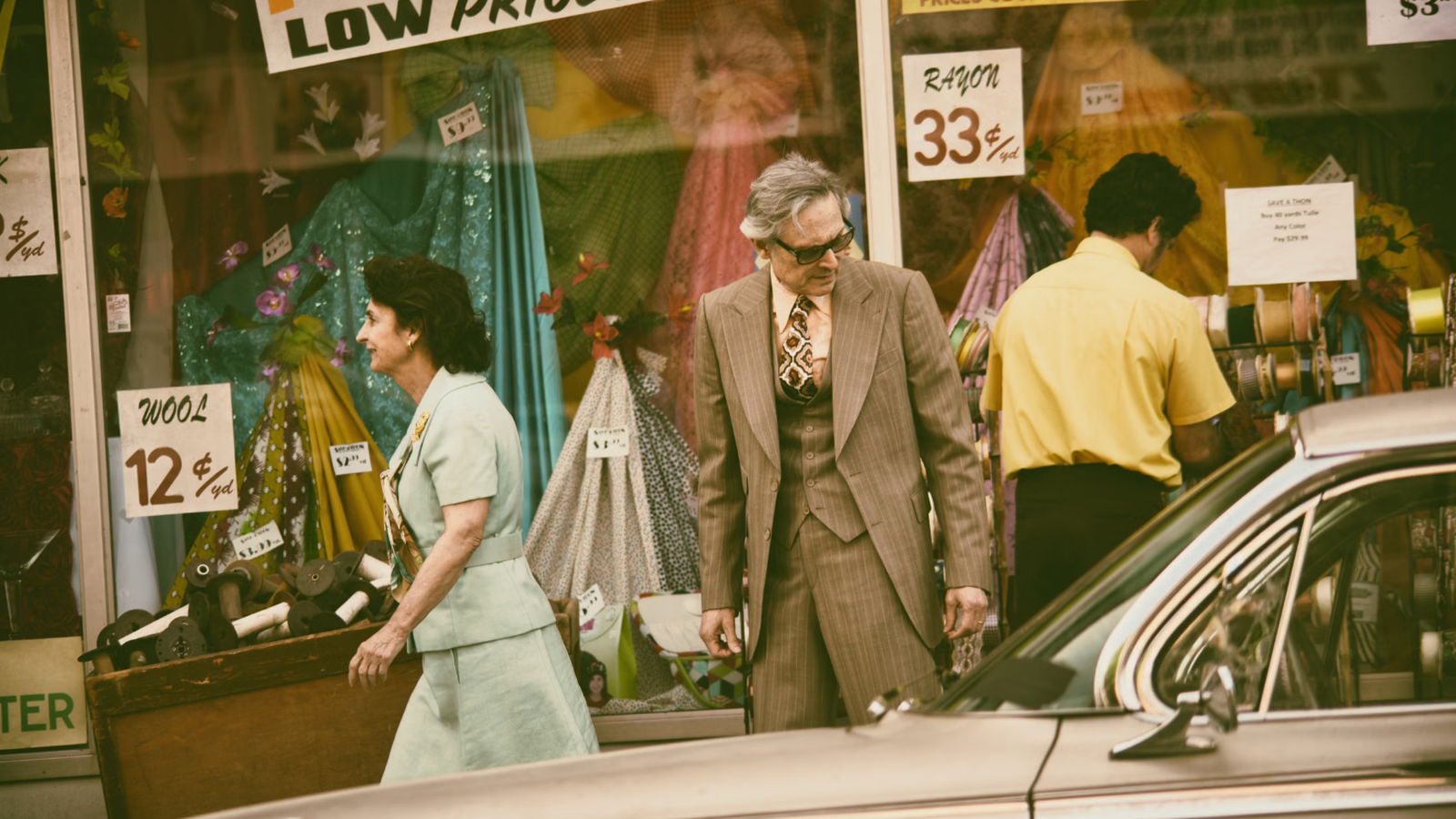
Because ready-made garments were still limited in selection and costly in the middle of the 20th century, families purchased raw cotton, linen, and printed calico to make their own clothes and household linens. Fabric was stored on shelves along the back wall. Clerks would pull down bolts and roll them out over the long wooden counters, measure off the required amount using brass tacks embedded in the countertop at regular intervals, and then cut the piece to length using large shears.
18. Glass Display Cases Kept Fine Goods Safe But Visible

Such small treasures as pocket watches, razor blades, or spools of silk ribbon would have been vulnerable to dust, damage, or pilfering in an open shop. With the slanted glass front of these oak-and-brass countertop display cases, available between the 1880s and the 1940s, shoppers could examine such fine merchandise without having to actually touch it. Even more elaborate ribbon cabinets kept spools of ribbon on internal revolving wheels. The shop assistant could then pull the requisite length of silk through a slot without having to unlock the cabinet at all.
19. Sticky Flypaper Ribbons Hung Over The Bulk Food Bins

There were no screens on the doors, no A/C, no bug sprays. The doors were left open, and the cheese and pickles in barrels out on display attracted flies all summer long. Store owners would hang coiled ribbons of flypaper, which had been painted with a mixture of resin, castor oil, and wax, from the rafters to catch the flies before they could get on the counters. These flypaper ribbons, made famous by companies such as Tanglefoot, remained visible for anyone to see. They were amber colored, sticky, and covered in dead flies. These spirals of flypaper were ubiquitous well into the 1950s.
20. The Brass Cash Register Rang A Bell For Every Sale

Before cash registers, merchants left their cash sitting openly in wooden counter drawers. Stores were vulnerable to careless errors by cashiers and silent, unrecorded pilferage. Beginning in 1884, the National Cash Register Company sold its heavy cast-brass registers with fancy scroll-work decoration, typical from about 1888 to 1915. By pressing in price keys, then turning a hand crank on the side, the cash drawer would spring open, a bell would ring, and wooden price flags would rise up behind a glass plate for the customer to view as well. With every transaction, the sale was a public affair.
This content was created with the help of AI.
Share this post


Popular posts
-

20 Lost Books We Only Know Through Other Writers
-
20 Vintage Coupons And Prizes That Had Shoppers Hooked
-

Detroit woman dines at Texas Roadhouse. Then she says the server ID’d her for plastic silverware
-

Woman orders bowl of chili at Texas Roadhouse. The portions seem off—so they ask for an empty cup. Workers admit they’re right: ‘The same’