
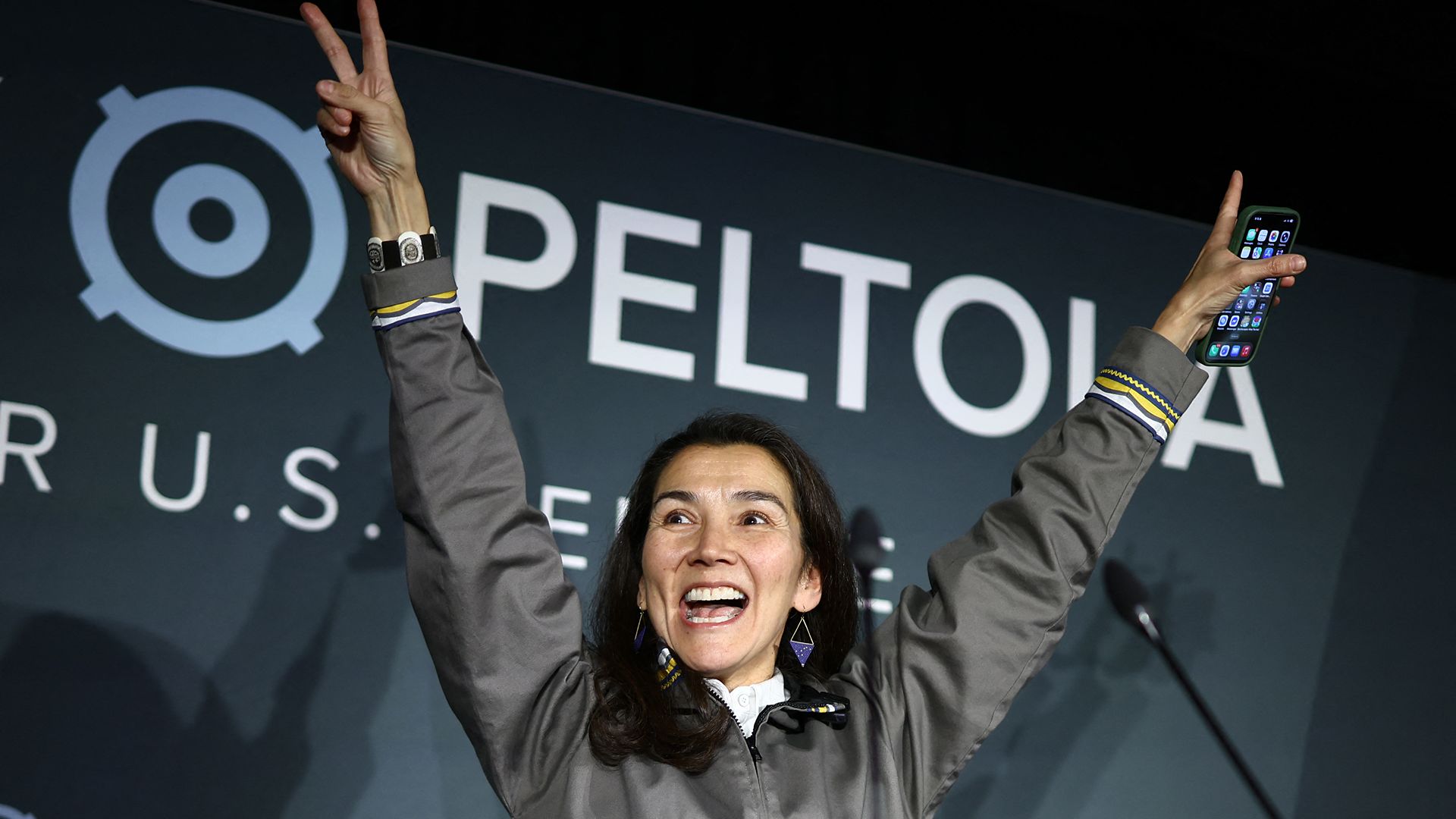
Alaska has delivered the final Senate victory of the 2026 midterm elections, giving Democrats a commanding 56–44 majority after former congresswoman Mary Peltola defeated two-term Republican Senator Dan Sullivan in a state Donald Trump carried comfortably just two years earlier. The Associated Press called the race on November 17, completing a nationwide Democratic campaign that flipped nine Republican-held Senate seats and ended the GOP's control of the chamber. Democrats entered the election cycle facing a 53–47 Republican majority but will begin the new Congress in January 2027 with their largest Senate advantage in 16 years. The nine Republican seats captured also represent the party's biggest such gain in a single election since 1958, highlighting the scale of the political reversal. The result is particularly striking in Alaska, where Trump won by approximately 13 percentage points in the 2024 presidential election. Although Democrats had already secured control of the Senate before Alaska's result was announced, Peltola's victory further expanded their majority and cemented the party's broader gains in both chambers of Congress.
Peltola's victory represents a remarkable political comeback for the former representative, who became the first Alaska Native elected to Congress in 2022 before losing her House seat to Republican Nick Begich in 2024. A member of the Yup'ik community, she has built her political identity around Alaska's rural communities, fishing industry and economic challenges, emphasizing local priorities rather than ideological battles in Washington. During the Senate campaign, she repeatedly addressed the rising cost of groceries, fuel, housing and electricity, particularly in remote communities where residents depend heavily on expensive transportation and diesel-powered heating. Following her victory, Peltola promised, «I'll work relentlessly to serve the interests of Alaska, and I'll be guided by your voices every step of the way.» Her campaign also emphasized political independence and cooperation across party lines, an approach that helped distinguish her from the national Democratic establishment. By defeating an established Republican incumbent in a traditionally conservative state, Peltola demonstrated how economic concerns and local political identity could reshape a race that initially appeared favorable to the GOP.
56 seats was an unimaginable result even just a few months ago.
The Alaska result completed a national Democratic advance that extended far beyond the traditionally competitive Senate battlegrounds. The party captured Republican-held seats in North Carolina, Maine, Ohio, Texas, Iowa, Kansas, South Carolina and Mississippi, alongside its victory in Alaska, producing nine flips and a 56-seat incoming Democratic caucus that includes allied independents. Several of these victories occurred in states with long histories of supporting Republican candidates, underscoring the breadth of the midterm losses suffered by Trump's party. Senate Democratic leader Chuck Schumer acknowledged the unexpected scale of the outcome, writing on X, «56 seats was an unimaginable result even just a few months ago.» Democratic campaigns had emphasized the cost of living, dissatisfaction with federal policies and concerns about government accountability, while Republican candidates faced the challenge of defending the administration's record. The Senate results also coincided with Democrats reclaiming control of the House of Representatives, fundamentally changing the congressional balance that had supported Trump's agenda during the first two years of his second term.
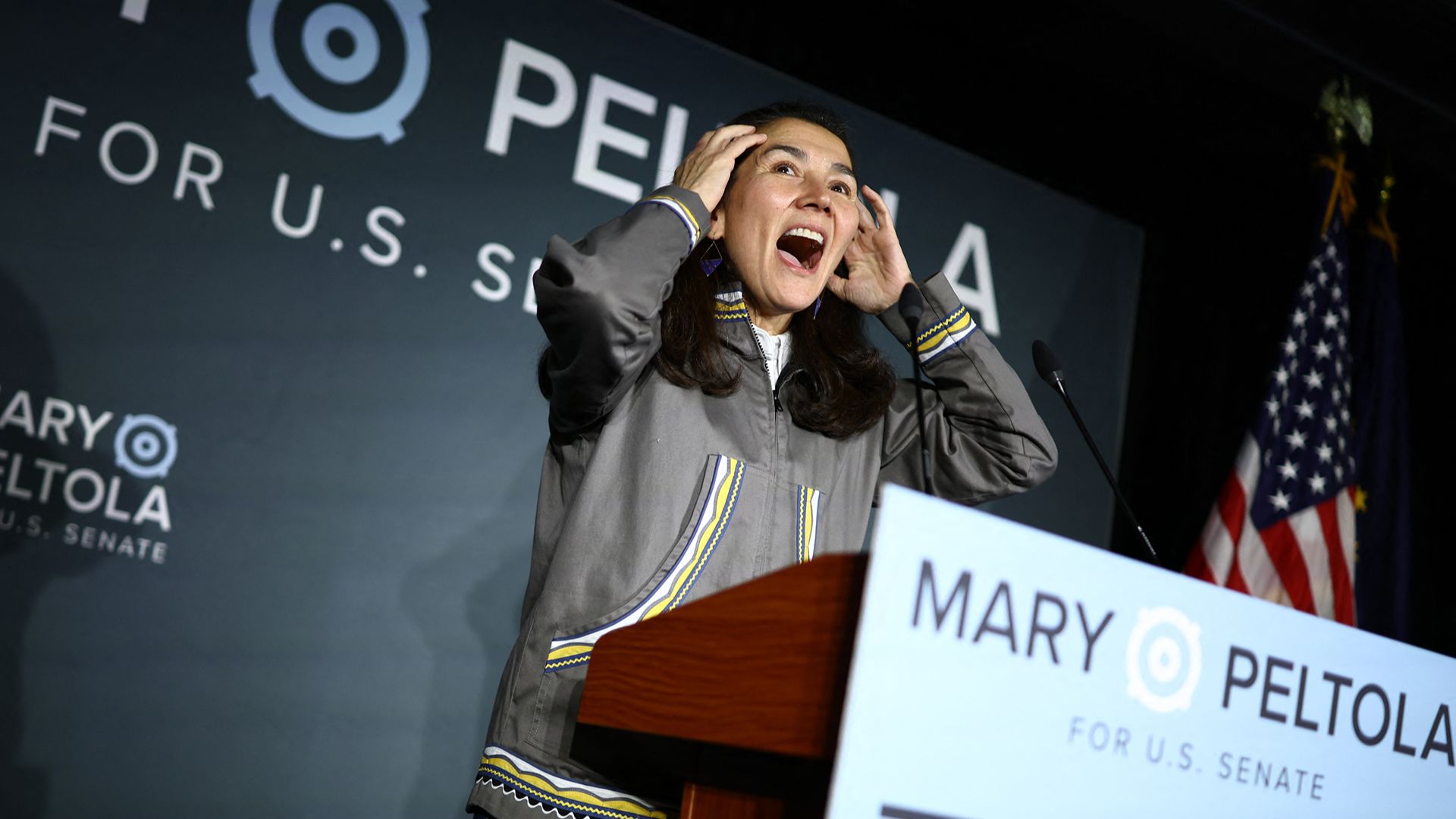
Trump had challenged the legitimacy of Alaska's election before Peltola's victory was confirmed, accusing unnamed political opponents of introducing additional candidates to divide Republican support. Speaking to reporters on November 16, he declared, «Well, I did — they put in a fake candidate. They put in two fake candidates, not one. And if you add them up, Dan Sullivan wins. But they put in two fake candidates. Add them up, Dan Sullivan wins, so terrible. I mean, one of them happened to be named Dan Sullivan, OK? It was a phony deal. He even tried to change his middle initial so he had the same — so he went from a J to an S, but that they didn't let him do. No, they gotta — what they've done in Alaska is absolutely a disgrace.» However, the reported election figures contradict Trump's central numerical claim. Peltola received 144,302 votes, compared with 131,844 for Republican incumbent Dan S. Sullivan, giving her a lead of 12,458 votes. Daniel J. Sullivan Jr., whose similar name became central to the controversy, received 4,760 votes, while another Republican candidate, Gerald Heikes, obtained 6,105. Even if all 10,865 votes cast for those two candidates were hypothetically added to the incumbent's total, Peltola would still win by 1,593 votes. That calculation is not how Alaska's ranked-choice voting system operates, but it demonstrates that Trump's proposed arithmetic would not overturn the reported result.
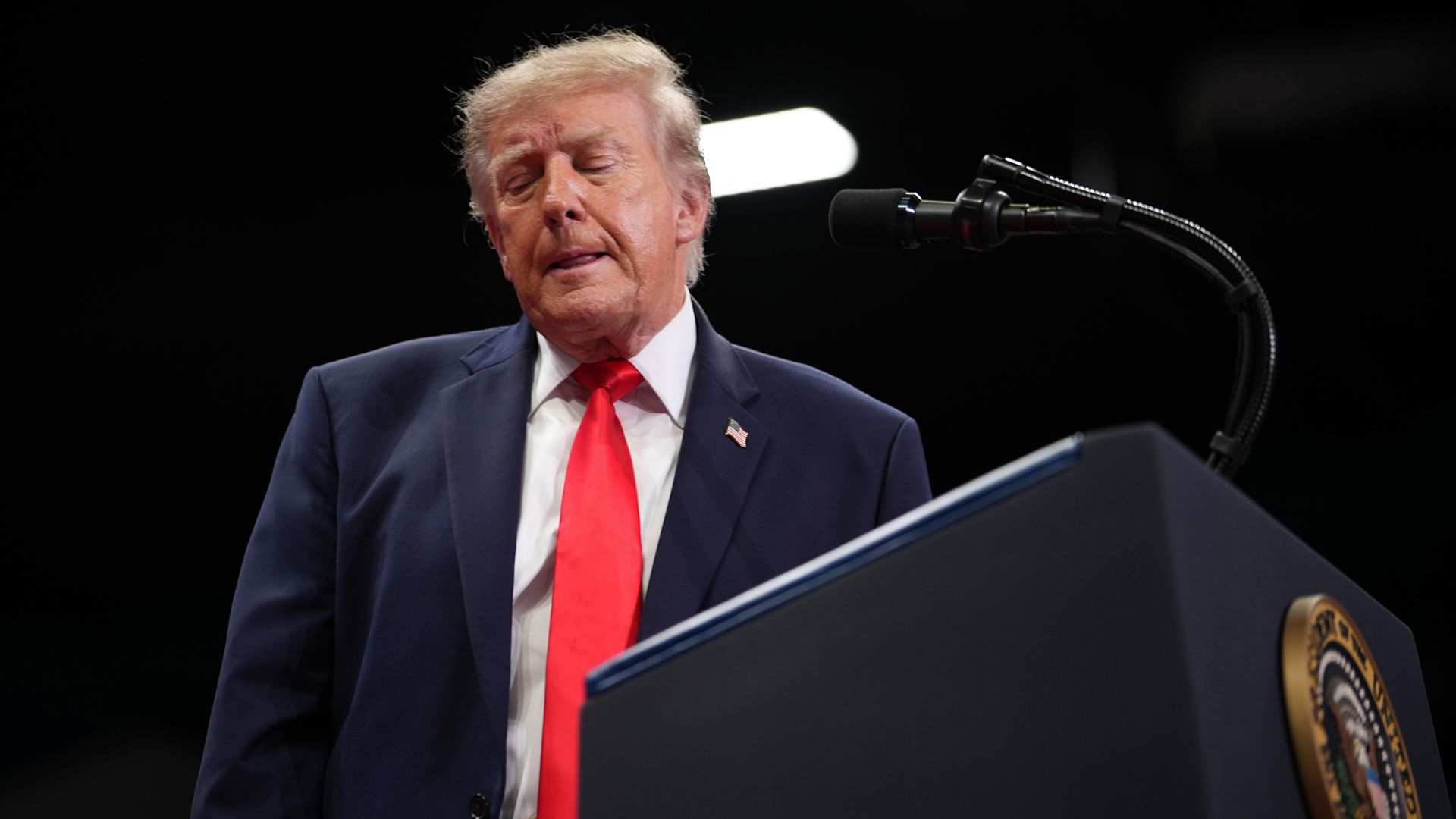
The controversy surrounding the second Sullivan nevertheless prompted federal legal action and an investigation that continued after Peltola was declared the winner. Daniel J. Sullivan Jr., a retired teacher from Petersburg, had entered the election under a name similar to the incumbent's, prompting allegations that people connected to Peltola's campaign had encouraged him to run to confuse voters. The New York Times reported evidence and testimony concerning the alleged recruitment effort, but Peltola denied knowing about any coordination. Addressing the accusations before the election, she stated, «I knew nothing about any other candidates on the ballot except for me and the incumbent.» Daniel J. Sullivan Jr. also denied running at the Democrats' request. The Justice Department subsequently filed a lawsuit seeking to delay certification if the Republican incumbent lost, pending further examination of possible voter confusion. A federal judge dismissed the case, but the department appealed and confirmed that a separate criminal investigation was underway. Importantly, neither the allegations nor the continuing investigation established that Peltola had participated in wrongdoing. The ballot identified the incumbent as Dan S. Sullivan, Republican, and the other candidate as Daniel J. Sullivan Jr., with no party affiliation. Peltola's reported first-choice vote share of 50.12% also placed her above the threshold for an outright victory without requiring the redistribution of lower-ranked preferences.
They put in two fake candidates, not one. And if you add them up, Dan Sullivan wins. But they put in two fake candidates. Add them up, Dan Sullivan wins, so terrible. I mean, one of them happened to be named Dan Sullivan, OK? It was a phony deal. He even tried to change his middle initial so he had the same — so he went from a J to an S, but that they didn't let him do. No, they gotta — what they've done in Alaska is absolutely a disgrace.
Beyond Alaska's disputed campaign, the election results will substantially change Trump's relationship with Congress during the remaining two years of his presidency. Beginning in January 2027, Democratic control of the Senate will give the party leadership of committees, authority over hearing agendas and considerably greater influence over presidential nominations, judicial appointments and federal legislation. Democrats will also be positioned to conduct investigations into executive branch decisions, government spending, immigration enforcement and controversies involving the president's business interests. Their simultaneous victory in the House will allow lawmakers in both chambers to pursue oversight of an administration that previously benefited from Republican congressional majorities. Nevertheless, the Senate's 60-vote threshold for advancing most contested legislation will remain an obstacle, while Trump will retain his presidential veto authority. Alaska's results also reflected a wider change within the state, where Democrat Jonathan Kreiss-Tomkins won the governorship, becoming the first Democrat elected to that office since 1998. His victory, alongside Peltola's Senate win, suggests that traditionally Republican voters were willing to support candidates campaigning on affordability, public services and local concerns. Whether those results represent a lasting realignment remains uncertain, but their immediate national consequences are clear: Democrats will enter the next Congress controlling both chambers, gaining new authority to investigate and challenge Trump's administration after a midterm election that dramatically altered Washington's political balance.
Created by humans, assisted by AI.
Share this post


Popular posts
-

North Carolina Farmer Can’t Find Anything That Repels Gnats. Then He Buys a Victoria’s Secret Perfume Popular With Midnight Ballerinas
-

Woman tows her car to Firestone. Then the mechanic tells her Valvoline ‘ruined’ the vehicle
-

Woman orders $600 ‘boneless couch’ from Amazon. She realizes she got played when she sees how it was delivered: ‘I didn’t know’
-

Texas man bartends at popular Sixth Street club. Then he reveals what he makes on a random Wednesday night