

/https%3A%2F%2Fcdn-tor.buminteractif.com%2F2026%2F03%2F20191236%2FGettyImages-2266880787.jpg)
Twenty days after Donald Trump and Benjamin Netanyahu attacked Iran, killing Iranian Supreme Leader Ali Khamenei, both America and Israel continue to strike the nation, and Iran continues to retaliate with strikes along the Gulf coast. Iran has been targeting US and Israeli military installations, transportation infrastructure, and oil sands and refineries. Since February 28, Iran has struck nine different countries in the Gulf region. Bahrain, Iraq, Jordan, Kuwait, Oman, Qatar, Saudi Arabia and the UAE have all been struck by either Iranian missiles or drones. Iran's Islamic Revolutionary Guard Corps (IRGC) announced that it has deployed attacks on at least 27 different military bases where US soldiers are stationed.
Iranian strikes on March 18
Saudi Arabia
On March 18, Iran continued to target the Saudi Arabian capital Riyadh. Iran also continued to target Al-Karj and other Eastern Provinces. Iran is only targeting the Eastern side of Saudi Arabia, framed by the Persian Gulf. Iran has not struck any part of Western Saudi Arabia or locations on the Red Sea coastline. Iran is only targeting Eastern Saudi Arabia, where all of the nation's oil fields are located.
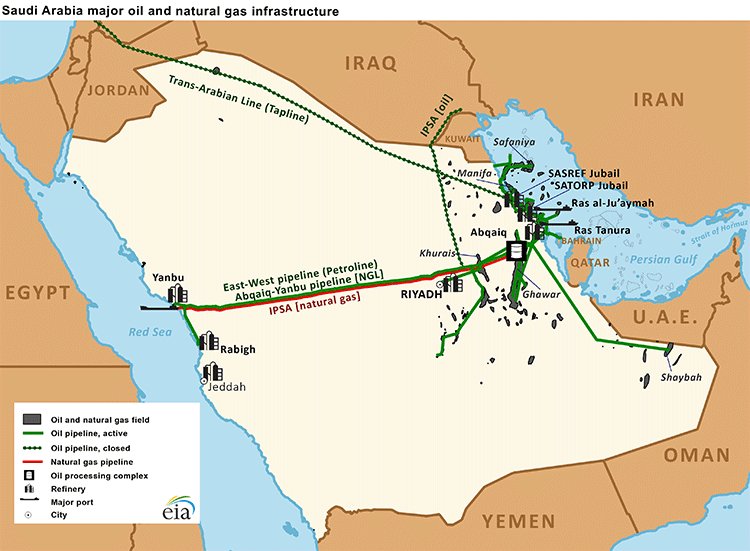
On March 18, Saudi Arabia sustained more than 20 waves of attacks stemming from drones or missiles. Riyadh's air defences intercepted eight missiles and six drones across four different attacks on the city's diplomatic quarter and residential areas. Shrapnel from one missile damaged the city, and more debris fell on an oil refinery south of the capital. In the Eastern Provinces, Saudi air defences intercepted at least 12 separate attacks. The country intercepted 36 drones and three ballistic missiles. All of the attacks were focused on Saudi oil infrastructure.
UAE and Bahrain
In the United Arab Emirates, an Iranian missile successfully struck a road near Al Minhad Air Base. The air base is approximately 15 miles south of the UAE capital, Dubai, and houses American, British, and Australian troops. UAE officials reported that the strike damaged the air base and sparked a fire, but no fatalities were reported. The UAE reportedly intercepted 27 drones and 13 ballistic missiles in a single wave on March 18, and confirmed that it had successfully intercepted another wave as well, but failed to give specifics. In Bahrain, the Bahrain Defence Force reported that it had successfully intercepted one drone and four ballistic missiles. Officials did not say where the attacks were targeted.
Qatar and Kuwait
In Kuwait, the army announced that on March 18, the country shot down 20 drones and four ballistic missiles. Iran has been targeting Kuwait's oil refineries, including the Mina Al-Ahmadi oil refinery, a site with a petroleum production capacity of 730,000 barrels per day. Parts of the Mina Al-Ahmadi refinery have been shut down since Iran's attacks on the site. The Kuwaiti National Guard released a separate report from the army's, claiming it had shot down an additional seven drones and reported that three more drones had fallen in uninhabited areas. In Qatar, a ballistic missile struck Ras Laffan Industrial City, causing a fire in the major liquefied natural gas hub. Qatar reported intercepting six more missiles targeting Ras Laffan, as well as one missile targeting an unidentified site.
Iraq and Iraqi Kurdistan
Iraq also reported a slew of missile attacks targeting the country's infrastructure. One drone was intercepted en route to Baghdad International Airport. Iraq reported two successful strikes on the country. An Iranian drone struck the US Embassy complex in Baghdad, sparking a fire, and an attack struck Kirkuk Air Base, causing a fire and damage. No casualties were reported in either attack. In Iraqi Kurdistan, drone attacks punctuated the night and continued through the morning. In Erbil, a number of drones were intercepted in the early hours of March 18. Peshmerga forces reported that drones struck their bases in Erbil and Sulaymaniyah provinces, injuring three fighters between the two locations.
Iranian strikes on March 19
Saudi Arabia
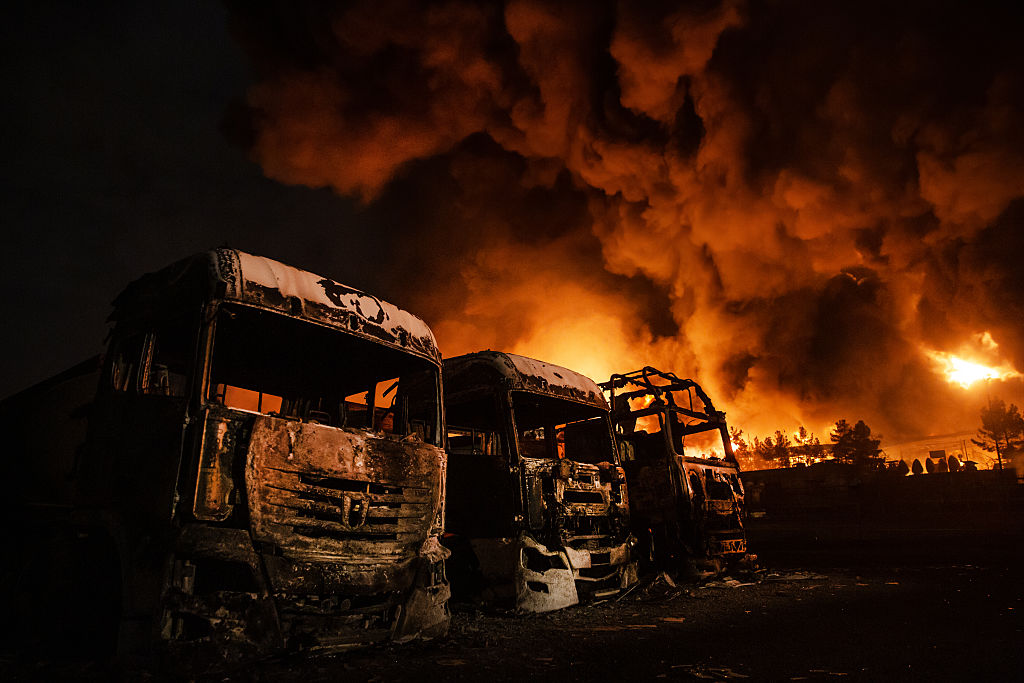
On March 19, Iran focused on the Eastern Provinces of Saudi Arabia. Saudi officials reported intercepting continuous waves of drone attacks on the Eastern Coast. At least 11 waves of drones and missiles were launched, with 25 drones and two ballistic missiles being intercepted by defence forces. In a change of strategy, Iran struck the Red Sea coast in Saudi Arabia. A drone struck the SAMREF oil refinery in Yanbu, while Saudi forces intercepted a ballistic missile targeting the Port of Yanbu. These were the first attacks on Saudi Arabia's Western Provinces, and show a shift in Iranian strategy. Right now, Saudi Arabia is managing to bypass the Bab al-Mandab Strait by using its massive East-West Abqaiq-Yanbu pipeline, lessening Iran's impact on the oil process. Iran is now targeting the Port of Yanbu, where the Abqaiq-Yanbu pipeline ends.
Kuwait and Bahrain
On March 19, Iran expanded its attacks on Kuwait, targeting more energy infrastructure. One drone struck the Mina al Ahmadi refinery. The drone struck an operational unit, igniting a small fire and halting production for multiple hours. No casualties were reported from Mina al Ahmadi. The Mina al Abdullah refinery was also struck, igniting a fire with no reported casualties. The Kuwaiti army reported that it intercepted 13 drones as well as a missile barrage on March 19. In Bahrain, Iran launched only one wave of attacks, with the Bahrain Defence Forces intercepting two missiles and four drones.
UAE
In the United Arab Emirates, Iranian attacks focused on energy infrastructure. Emirati authorities reported dozens of missiles being intercepted targeting the Habshan gas facility and the Bab oil field. Both sites were forced to shut down due to damage from fallen debris. UAE officials also announced a slew of interceptions later in the day, claiming that Iran had sent a single wave of seven ballistic missiles and 15 drones. UAE authorities also claimed that more waves continued into the evening, all of which were intercepted by defence forces.
Iraq and Iraqi Kurdistan
In Iraq, clashes between the Iraqi army and Iranian-backed militia forces defined the day, with skirmishes breaking out across several provinces. Iran also sent multiple waves of drone attacks to Iraq, striking the towns of Al Khalis and Al Ibrahimiyah. Neither drone strike caused casualties or major damage. In Basra, two drones struck the radar system at Umm Qasr naval base, though details on casualties and damage were not provided. In Iraqi Kurdistan, attacks were concentrated on Iranian-Kurdish opposition groups. Four drones targeted the headquarters of an Iranian-Kurdish opposition party in Erbil province. The drone strikes caused fires across the site, and multiple injuries were reported. Two more facilities were attacked on March 19, but no casualties were reported.
Cost of war
As of March 20th, preliminary figures show harrowing victim counts across the Middle East. In Iran, more than 1,400 people have been killed by US and Israeli strikes. US forces have struck more than 7,000 locations in Iran, and alongside the 1,444 killed, another 18,500 Iranians have been injured, and more than 3 million people have been displaced. A US strike targeting an all-girls elementary school killed 168 children last week. In Lebanon, more than 1,000 people have been killed by Israeli strikes, with another 2,500 injured and more than 1 million civilians displaced. Thirteen US service members have been killed, and 18 people have been killed in Israel. Eighty-five people have been killed by Iranian strikes across Gulf Countries.
Created by humans, assisted by AI.
