
Following their sweeping victory in the November 3 midterm elections, Democrats are preparing a broad wave of congressional investigations targeting Donald Trump, his family's business activities, the handling of the Jeffrey Epstein files and controversial immigration enforcement operations. With control of both the House of Representatives and the Senate beginning in January 2027, Democrats will gain the authority to launch committee investigations, issue subpoenas and compel testimony from administration officials and individuals connected to the president. Representative Robert Garcia, who is expected to chair the House Oversight Committee, delivered a two-word warning to those potentially facing scrutiny: «Lawyer up.» The California Democrat has identified alleged corruption involving the Trump family, abuses by Immigration and Customs Enforcement, corporate misconduct and the Epstein scandal as major priorities. Democratic leaders argue that the election results provide a mandate to investigate potential abuses of power, while the White House has dismissed the emerging oversight agenda as politically motivated. The planned investigations could create an extended confrontation between Congress and the administration during the final two years of Trump's presidency.
Among the first targets of the incoming Democratic majority will be Trump's expanding business interests and allegations that members of his family have benefited financially from their proximity to the White House. Garcia has specifically identified cryptocurrency ventures associated with the president, foreign investments involving his son-in-law Jared Kushner, and corporate relationships involving Donald Trump Jr. as matters requiring closer examination. During a November 5 interview with PBS NewsHour, Garcia declared, «Look, the first issue for us is going to be around the Trump family and the clear corruption.» He also questioned Kushner's investment firm's receipt of $2 billion from Saudi Arabia's sovereign wealth fund following Trump's first administration and raised concerns about private companies connected to the president's associates receiving government contracts. Democrats are additionally examining corporate contributions to Trump's White House ballroom project and whether financial relationships influenced federal regulatory or enforcement decisions. These allegations have not established criminal wrongdoing, and Trump and his allies have denied engaging in corruption. However, Democrats intend to investigate whether presidential authority was used to benefit private financial interests while American households continued struggling with elevated living costs.
This is literally déjà vu all over again. They've tried this before. It didn't work last time; it's not going to work this time.
The Jeffrey Epstein scandal represents another major investigative priority, with Democrats promising to examine the administration's handling of records connected to the late convicted sex offender, the treatment of his victims and the circumstances surrounding the disclosure or withholding of government documents. Garcia has emphasized that the inquiry should prioritize survivors and determine whether federal authorities adequately investigated individuals who may have participated in Epstein's criminal activities. «There has to be justice for the survivors of Jeffrey Epstein,» he declared during his PBS NewsHour interview. Lawmakers are also expected to scrutinize decisions made by the Justice Department concerning investigative files, potential Epstein associates and the treatment of Ghislaine Maxwell, who is serving a federal prison sentence for helping Epstein sexually abuse underage girls. Democrats have previously sought additional documents and testimony concerning the case, including information about Trump's past association with Epstein. However, appearing in Epstein-related records or having known him does not establish involvement in criminal activity, and Trump has denied wrongdoing connected to the scandal. The incoming majority intends to use its expanded investigative powers to determine whether relevant information was improperly withheld and whether victims have received adequate transparency and accountability.

Immigration enforcement will form another major part of the Democrats' oversight agenda, particularly following the deaths of American citizens Renee Nicole Good and Alex Pretti during federal operations in Minneapolis earlier this year. Good, a 37-year-old mother of three, was fatally shot by an ICE officer on January 7, while Pretti, a 37-year-old intensive-care nurse, was killed by Border Patrol agents on January 24. Both incidents prompted nationwide protests and questions about federal use-of-force policies, the accuracy of official statements and the accountability of immigration personnel. Democrats intend to examine internal communications, operational orders, training procedures and the circumstances surrounding the shootings, including allegations that administration officials misrepresented the victims' actions. Representative Jamie Raskin, expected to lead the House Judiciary Committee, has pledged to use «every tool» available to investigate ICE operations. Meanwhile, Representative Bennie Thompson has demanded that the Department of Homeland Security preserve relevant documents. DHS general counsel James Percival rejected the Democrats' approach, accusing them of being «more interested in political shenanigans than in governing» while indicating that the agency was prepared to respond to their inquiries.

Trump has already signaled that he intends to confront the incoming Democratic majority rather than accept its investigations without resistance. In a podcast interview published November 2, before the midterm elections, the president suggested he would consider issuing preemptive pardons to administration officials and political allies if Democrats attempted to pursue them through investigations. Asked whether he would protect members of his administration, Trump replied, «I would if I needed to. Sure.» He reinforced that position by declaring, «I would not even think about it. I'd do it.» Trump also indicated that he would intervene if Democrats targeted Elon Musk, the billionaire businessman and former administration adviser whose companies maintain significant relationships with the federal government. The confrontation intensified after the election, when Trump accused Democrats of threatening Republican donors, administration personnel and political allies. In a November 7 Truth Social statement, he characterized the proposed investigations as extortion and ordered the Justice Department to examine the matter, declaring, «By copy of this statement, I am ordering the Department of Justice to look into this criminal act, immediately!» The administration's response suggests that future congressional oversight could encounter direct opposition from federal agencies and the White House.
There has to be justice for the survivors of Jeffrey Epstein.
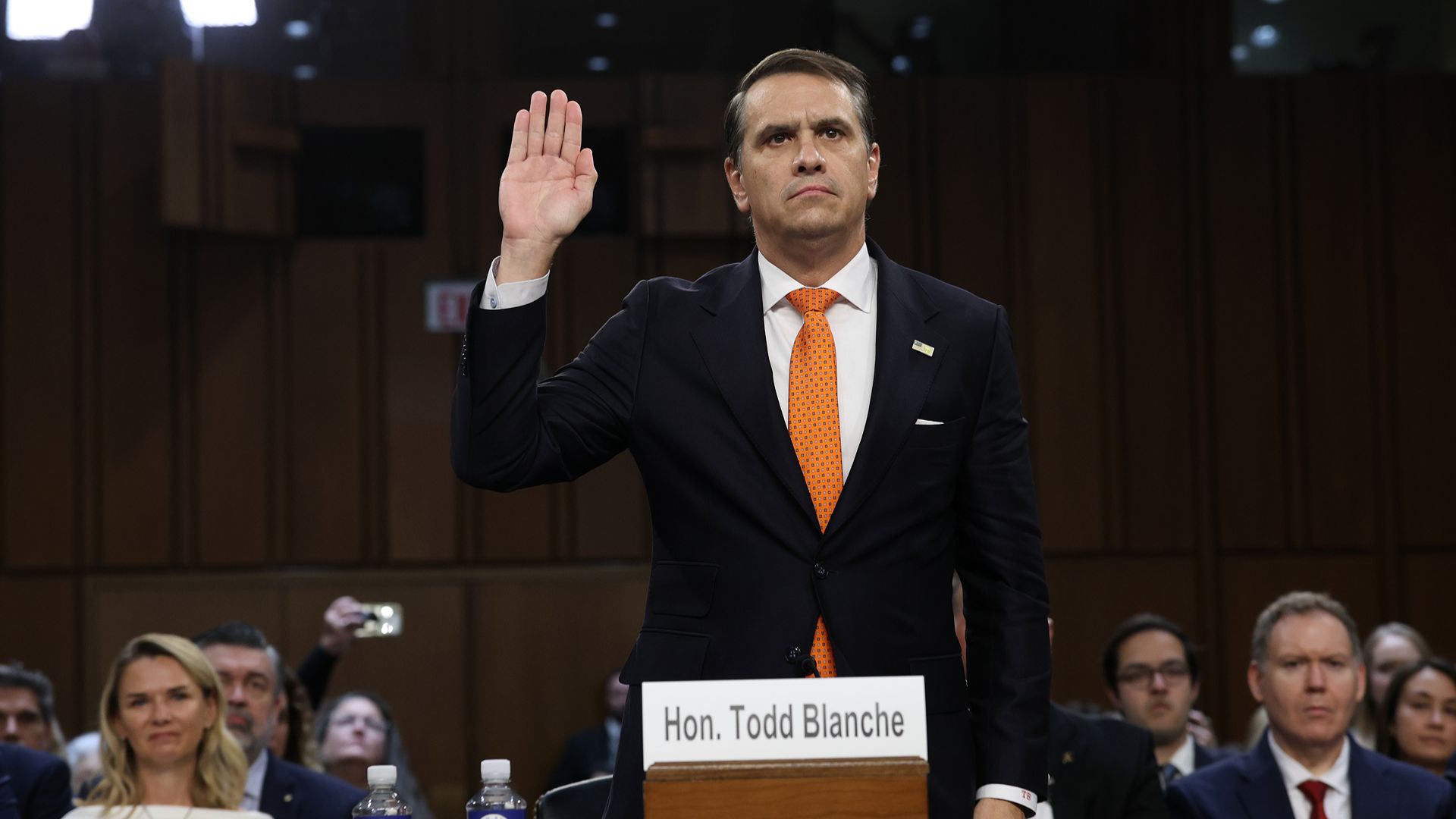
Attorney General Todd Blanche reinforced that position during television interviews on November 8, arguing that Democratic leaders were preparing politically motivated investigations rather than exercising legitimate congressional oversight. «This is literally déjà vu all over again. They've tried this before. It didn't work last time; it's not going to work this time,» Blanche declared, while emphasizing that the Justice Department would represent executive branch officials facing congressional scrutiny. The White House similarly accused Democrats of prioritizing investigations over governing, warning that their approach could undermine cooperation on economic issues. Democratic leaders, however, maintain that investigating potential misconduct is a constitutional responsibility rather than political retaliation. House Democratic leader Hakeem Jeffries has urged his colleagues to concentrate on affordability and healthcare alongside accountability, while Senator Elizabeth Warren has emphasized the importance of pursuing both legislative priorities and oversight. With Democrats preparing to assume control of Congress in January 2027, the competing positions could produce prolonged disputes over subpoenas, executive privilege and the limits of congressional authority. Although investigations may expose previously unavailable information, their findings and consequences remain uncertain, particularly given Trump's continued control of the executive branch and his willingness to challenge congressional demands.
Created by humans, assisted by AI.
Share this post


Popular posts
-

20 Old Hollywood Stars Who Sold Oddly Unglamorous Products
-

Florida woman parks $80,000 BMW in 30-minute spot. Minutes later, her car gets towed. That’s not the worst part: ‘It’s already throwing codes’
-

20 Five-and-Dime Tricks That Invented Impulse Buying
-

‘It’s not even a full cup’: New York man goes to tea shop. Then he gets a $94.72 matcha