Trump’s Midterm Campaign Ends With Photos of Drains and Pipes and a Defeatist-Sounding «We Gave This a Very Strong Shot»


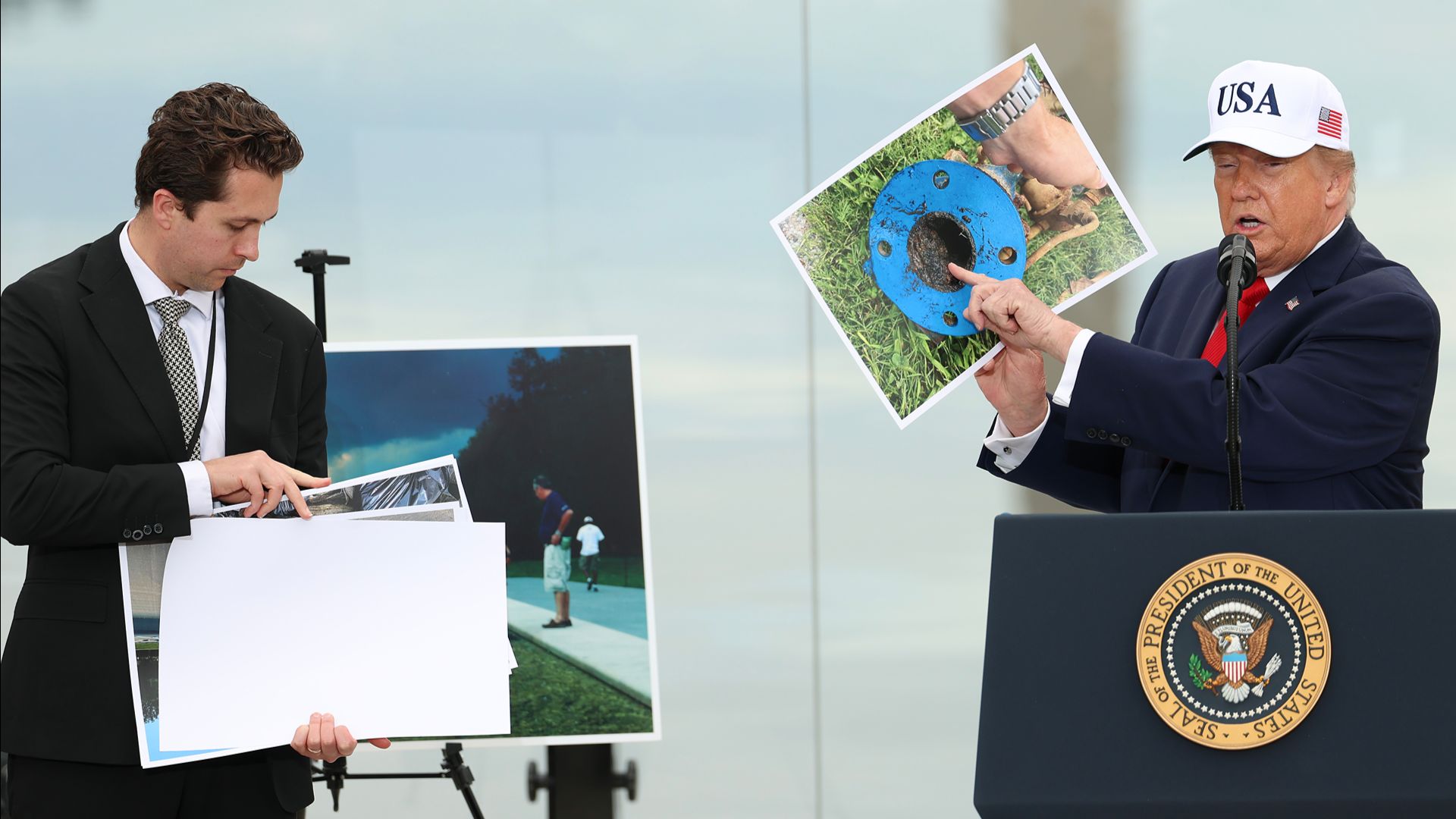
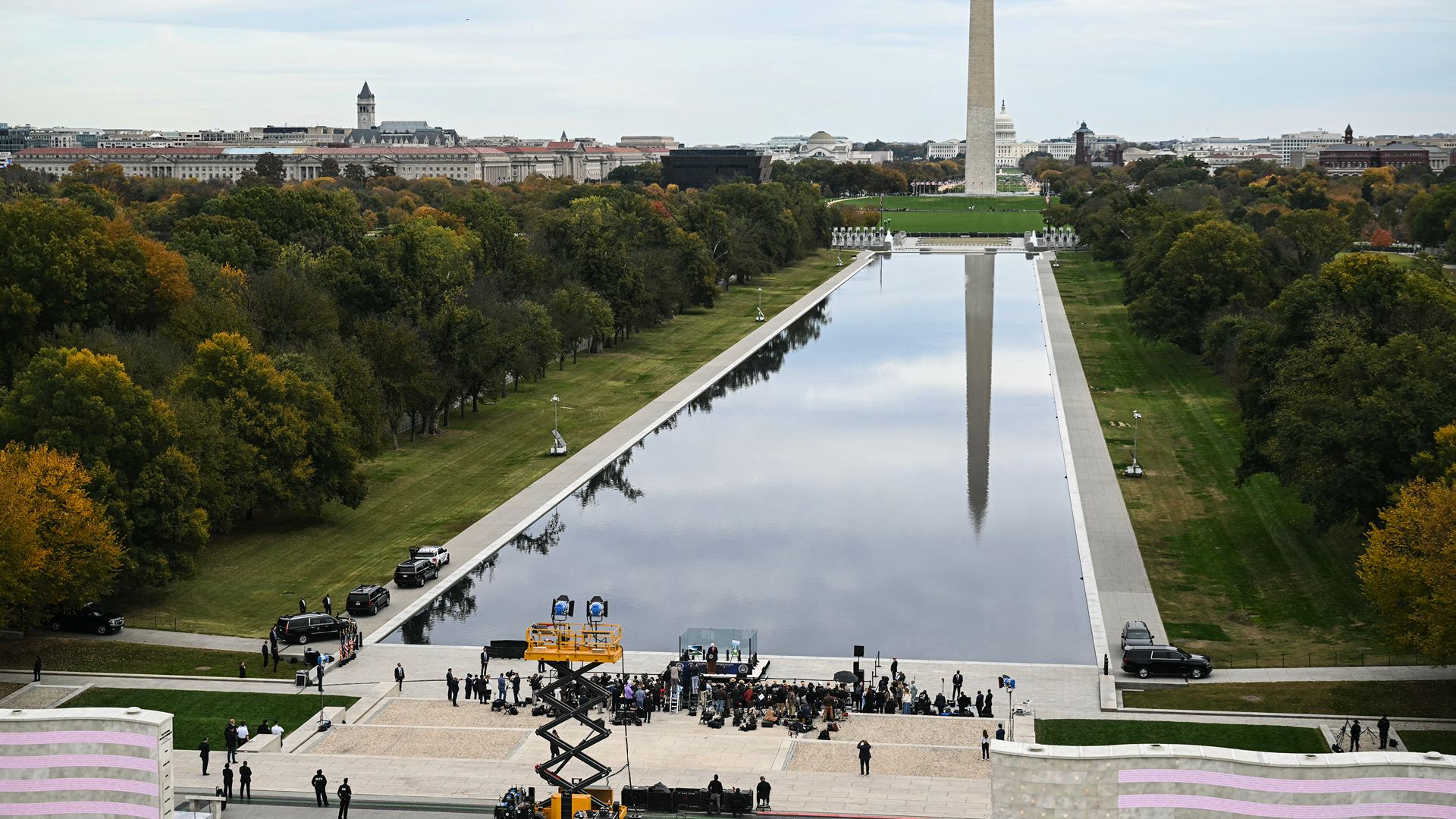
In an unusual conclusion to his midterm campaign, Donald Trump delivered his final major public speech before the November 3 elections on Monday, November 2, standing before the Lincoln Memorial Reflecting Pool in Washington, D.C., where a small audience of invited guests and reporters watched an extended presentation about plumbing, drainage systems, and algae removal. Rather than immediately addressing voters' concerns or the Republican Party's increasingly competitive electoral battles, Trump spent approximately 20 minutes discussing renovations to the historic landmark, even inviting an aide onto the stage to display large photographs of deteriorating pipes and damaged infrastructure. «The pipes now are totally renovated. They're brand new pipes put in and the pipes being very important in terms of the algae and other things», Trump explained, defending a project that had experienced delays and cost overruns. Pointing to photographs of the pool's previous condition, he added, «It's — look, it's not an easy thing. The algae's brutal. It forms easily.» The renovation, initially estimated at approximately $1.5 million, ultimately cost more than ten times that amount. The spectacle provided an unexpected closing image for a campaign in which Republicans were fighting to preserve their congressional majorities.
The event followed weeks of campaign appearances marked by political controversies, confrontations with protesters, and questions about Trump's ability to mobilize the coalition that returned him to the White House in 2024. During an October 7 rally in San Antonio, Texas, authorities escorted 18 protesters from the venue after repeated interruptions disrupted the president's remarks. Two weeks later, an October 21 appearance at Clemson University in South Carolina was interrupted at least nine times by hecklers, with one confrontation escalating into a physical altercation between an attendee and a protester. Trump responded enthusiastically to the incident, praising the attendee who appeared to strike the demonstrator. Despite those disruptions, the president continued drawing enthusiastic supporters and campaigning extensively, holding more than two dozen rallies across 19 states during October. His final weekend included appearances in Dubuque, Iowa, and Salina, Kansas, two traditionally Republican states where unexpectedly competitive Senate contests had prompted urgent efforts to strengthen GOP turnout. The contrast between those partisan rallies and Monday's subdued Reflecting Pool presentation illustrated the unconventional nature of his final campaign message.
Now that doesn't happen because usually whoever the sitting president is, Republican or Democrat, good or bad, good president, great president, bad, for some reason the sitting president doesn't win the midterms, but we gave this a very strong shot.
Meanwhile, Democrats entered Election Day with signs of growing competitiveness across several states that Republicans had carried comfortably in previous elections, raising the possibility of a significant shift in congressional power. Senate races in Iowa, Kansas, Texas, Ohio, and Alaska had become increasingly consequential as Democrats sought to overcome the Republicans' 53–47 Senate advantage, while contests in Georgia, North Carolina, Maine, and Michigan added further uncertainty to the electoral landscape. Rising consumer prices, economic dissatisfaction, Trump's tariffs, and the continuing war with Iran had become central issues for Democratic candidates, who argued that the administration's priorities had worsened financial pressures on American households. Recent polling also pointed to substantial dissatisfaction with Trump's handling of the economy, although Republicans maintained that their tax policies, immigration enforcement, and broader economic agenda would ultimately resonate with voters. Democrats were also targeting competitive House districts across the country, where even relatively modest shifts could determine which party controls the chamber. With more than 57 million Americans having already cast ballots, the president's unusually restrained closing appearance came at a particularly consequential moment for his party.
Trump's closing remarks also included an acknowledgment of the historical difficulties facing a president's party during midterm elections, a striking contrast with the confident predictions that had characterized much of his campaign. After urging Americans who supported him in 2024 to return to the polls, Trump suggested that Republican victories would depend on whether his supporters could reproduce the turnout that secured his return to the White House. «Now that doesn't happen because usually whoever the sitting president is, Republican or Democrat, good or bad, good president, great president, bad, for some reason the sitting president doesn't win the midterms, but we gave this a very strong shot», he told the audience. Although he stopped short of predicting defeat and continued insisting that Republicans could retain their congressional majorities, the remark suggested a notably more cautious assessment of the party's prospects. His comments also reflected a longstanding political reality: the president's party frequently loses congressional seats during midterm elections, particularly when dissatisfaction with the administration becomes a central campaign issue.
Beyond the campaign itself, the Trump administration has faced mounting legal challenges over federal actions that critics describe as attempts to interfere with state-run elections. In California, the Justice Department sought to challenge voting procedures involving more than 20,000 registered voters whom federal officials alleged could be noncitizens, despite disputes over the reliability of the government's identification methods. On November 2, a federal judge blocked the administration from pressuring California election officials to segregate ballots or alter established counting procedures based on those allegations. The Supreme Court also rejected an emergency request connected to the dispute. In Alaska, the Justice Department challenged the presence of a candidate sharing Republican Senator Dan Sullivan's name on the ballot, arguing that it risked misleading voters, but a federal judge dismissed the government's complaint on November 1. Additional litigation has challenged federal voter-data collection and information-sharing practices, with courts imposing restrictions on some initiatives immediately before Election Day. The administration maintains that its efforts are intended to prevent illegal voting and protect election integrity, while voting-rights organizations and Democratic officials argue that the actions threaten established election procedures and risk disenfranchising eligible voters.
The pipes now are totally renovated. They're brand new pipes put in and the pipes being very important in terms of the algae and other things.
As Americans headed to the polls on November 3, scrutiny also intensified over the Justice Department's decision to deploy approximately 1,000 election monitors and observers across all 50 states, the largest such operation in the department's history. Federal officials defended the deployment as an effort to protect voting rights and enforce federal election laws, emphasizing that election monitoring has been conducted by administrations of both parties for decades. However, civil-rights organizations expressed concerns about the unprecedented scale of the initiative and the potential involvement of personnel associated with federal law enforcement. Following litigation, the government assured a federal court that personnel deployed as election monitors would not possess arrest powers, while the court demanded additional confirmation of those safeguards. The broader disputes unfolded as Republicans fought to preserve control of Congress and Democrats sought the congressional authority to investigate the administration and challenge its legislative agenda. Against that backdrop, Trump's final campaign appearance offered an unusual political image: a president displaying photographs of drainage pipes and celebrating renovations to Washington's Reflecting Pool while acknowledging that his party had made a strong effort in an election whose outcome remained uncertain.
Created by humans, assisted by AI.
