Heatwave in Europe: A “harsh reminder” of climate change, says the UN Climate Change


/https%3A%2F%2Fcdn-tor.buminteractif.com%2F2026%2F05%2F28180637%2FCreation-sans-titre-355.jpg)
France, Spain, the United Kingdom, and Ireland: the heat wave continues across the Old Continent. It serves as a “harsh reminder” of the consequences of climate change and the need to transition to clean energy, the UN climate chief said on Wednesday.
“This latest heatwave in Europe is a stark reminder of the spiraling consequences of the climate crisis, both human and economic. The main culprit is the world's dependence on burning coal, oil, and gas, as well as the destruction of forests,” said UN official Simon Stiell in a statement sent to AFP.
“Many other regions of the world are also being hit hard, such as India and other parts of Asia. The science is clear: human-caused climate change is making these heat waves more frequent and more extreme,” he explained.
Unprecedented temperatures
Due to a persistent “heat dome,” France has experienced unprecedented temperatures for this time of year. On Tuesday, Météo-France recorded a new monthly temperature record nationwide, with a consolidated national heat index of 24.9°C.

Temperatures also soared in the United Kingdom. The mercury rose to 34.8°C on Monday at Kew Gardens, a botanical garden located in southwest London. This marks a record for the highest temperature ever recorded in May and the highest ever recorded during meteorological spring, which runs from March to May, reports Courrier international. That said, “this new record didn't last long, as temperatures climbed to 35.1°C by Tuesday.”
“Farmers are under intense pressure due to the current heatwave, which follows a dry spring,” notes the London-based newspaper The Guardian. Many crops are at risk of reduced yields, as temperatures exceed their tolerance thresholds. Livestock are also suffering from heat stress, and the risk of wildfires is increasing. Economic losses are expected to amount to several hundred million pounds.”

According to the British media outlet, due to inflation and the consequences of the war in Iran, experts are even predicting that the United Kingdom is “silently heading toward a food crisis.”
UN official Simon Stiell, too, points to the war in the Middle East, which he says illustrates “the exorbitant costs of dependence on fossil fuel imports […] The solutions are just as clear: a faster transition to clean energy.”
In another article, The Guardian draws on reports from its correspondents in Dublin and Berlin, demonstrating that the phenomenon is not sparing the northern part of the continent.
European meteorologists are observing temperatures several degrees above seasonal norms across all of Northwestern Europe, a direct consequence of the same high-pressure system affecting the southern part of the continent.
Southern countries, such as Italy and Spain, are also affected by the heat dome, although these regions are more accustomed to high temperatures.
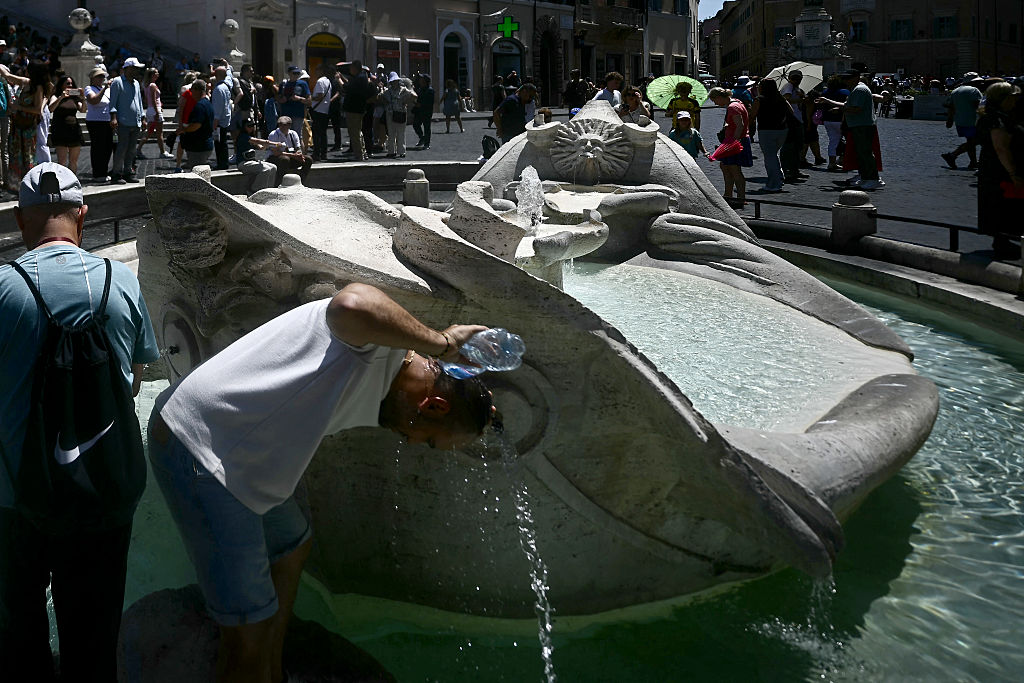
In Italy, several major cities have been placed on red alert by the Ministry of Health. Rome, Florence, Bologna, and Turin are now classified at Level 3, the highest health alert level. Temperatures have already reached levels unusual for late May: up to 33°C in Turin, 32°C in Florence and Bologna, and 31°C in Rome, with the heat index higher in several urban areas.
In Spain, temperatures have already exceeded 38°C in several regions in the south of the country, and locally, temperatures are expected to reach up to 40°C in the Andalusian valleys. According to the national meteorological agency, the city of Badajoz reached 38°C, a first in 71 years of records for this time of year.
