

/https%3A%2F%2Fcdn-tor.buminteractif.com%2F2026%2F10%2F07150342%2Fpike-tennesee-getty-345345dfgd34536fgfgdsfs.jpg)
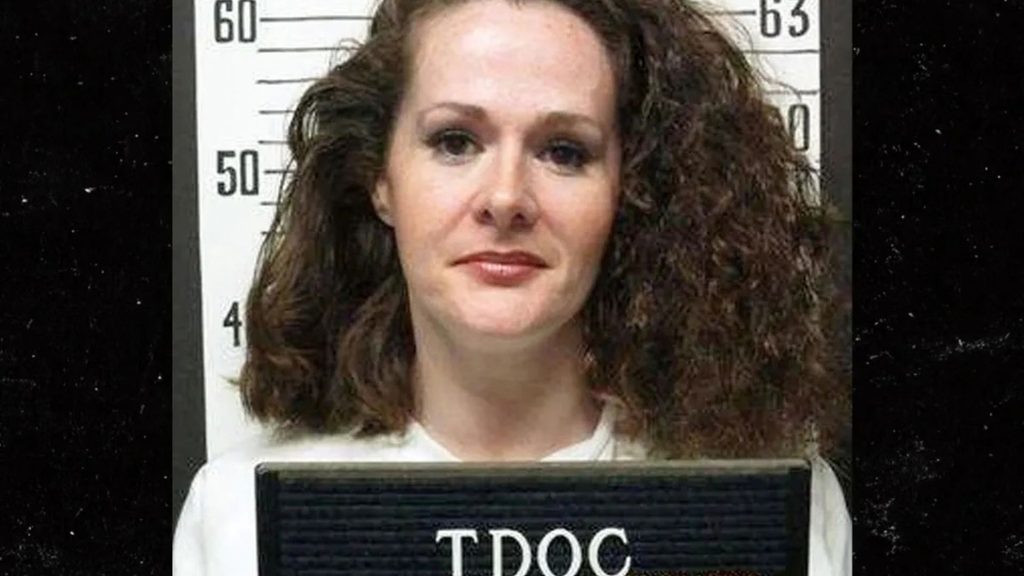
Nearly a week after Tennessee's controversial attempt to execute Christa Pike left her unconscious and dependent on a ventilator, her attorneys have announced an extraordinary change in her condition: the 50-year-old death-row prisoner is now conscious and speaking. The update came after days in which Pike's legal team said it had limited information about whether their client would recover from the two doses of pentobarbital administered during the September 30 execution attempt. As recently as Sunday, she remained unconscious and on a ventilator. On Tuesday, however, her attorneys announced that Pike had regained consciousness, was able to speak and remained under critical medical care at a Nashville-area hospital. In a statement reported by the Associated Press, her lawyers said, «Against all odds, Christa Pike is conscious, speaking, and continues to receive critical medical care.» They described her recovery as «medically unprecedented» while cautioning that her prognosis remains uncertain and that they expect a lengthy recovery. Dr. Joel Zivot, an anesthesiologist who has consulted for Pike's legal team, confirmed that she is now off the ventilator and able to speak, although she remains in intensive care and continues to face potentially serious complications.
The dramatic improvement follows an execution attempt that unfolded very differently from what Tennessee officials had planned. Pike, sentenced to death for the 1995 killing of 19-year-old Colleen Slemmer, was strapped to a gurney at Riverbend Maximum Security Institution on September 30 and given pentobarbital under Tennessee's single-drug lethal-injection protocol. Officials ultimately administered two doses, yet Pike continued breathing and remained alive long after the process was expected to end. Her attorneys later alleged that execution personnel struggled repeatedly to establish intravenous access, leaving both of her arms swollen, burned and blistered, and that some or all of the drug may have entered surrounding tissue instead of properly flowing into her bloodstream. Those complications were particularly significant because Pike's legal team had warned before the execution that she had small, difficult-to-access veins and a blood-related medical condition that could complicate the procedure. Their medical expert, Zivot, had also warned in a court filing that pentobarbital executions could produce pulmonary edema, describing it as an intensely painful condition in which fluid accumulates in the lungs. Pike unsuccessfully challenged the method before her execution proceeded. After the second dose failed to kill her, an ambulance transported her from the prison to a hospital, where doctors began lifesaving treatment.
«Against all odds, Christa Pike is conscious, speaking, and continues to receive critical medical care.»
-Christa Pike's legal team
The failed execution immediately forced Tennessee officials to confront questions about a procedure they had insisted was capable of carrying out Pike's death sentence. The Department of Correction maintained afterward that it had «followed every step of the State's lawful, established execution protocol» and said the lethal-injection chemical used by the state had consistently been effective. But within hours, Governor Bill Lee announced that Tennessee would pause its remaining execution for 2026 and ordered what he described as a «comprehensive, third-party review» of what happened. Lee said carrying out a legally imposed death sentence is among the state's most serious responsibilities and that Tennesseans expect the process to be both constitutional and effective. The decision postponed the execution of Gary Wayne Sutton, who had been scheduled to die later this year, while investigators examine the circumstances surrounding Pike's survival. The episode is especially consequential because Tennessee had already overhauled its execution procedures following an earlier review ordered by Lee, and Pike's was the state's second troubled execution attempt of 2026. Her attorneys are now seeking preservation of drug lot numbers, execution records, needles and other evidence as they try to determine precisely how two supposedly lethal doses failed to kill their client.

For Pike's attorneys, her unexpected recovery has not changed the central demand they made immediately after the failed procedure: Tennessee should not attempt to execute her again. Her legal team renewed its request for Lee to commute her death sentence to life imprisonment, arguing that surviving what was intended to be a completed execution should remove another attempt from consideration. Attorney Steve Ferrell said before Pike regained consciousness that «The least that could happen now is that we at least take death off the table and start looking for what the future could be for her.» The lawyers are also pursuing a court order requiring the Tennessee Department of Correction to preserve physical, written and electronic evidence connected to the September 30 attempt, including materials that could help establish how the drugs were prepared and administered. The possibility of another execution is not merely theoretical: prisoners who survived failed execution attempts in previous cases have later faced renewed efforts to put them to death. Pike's attorneys are therefore pressing the governor for commutation while separately trying to establish exactly what happened inside Tennessee's execution chamber.
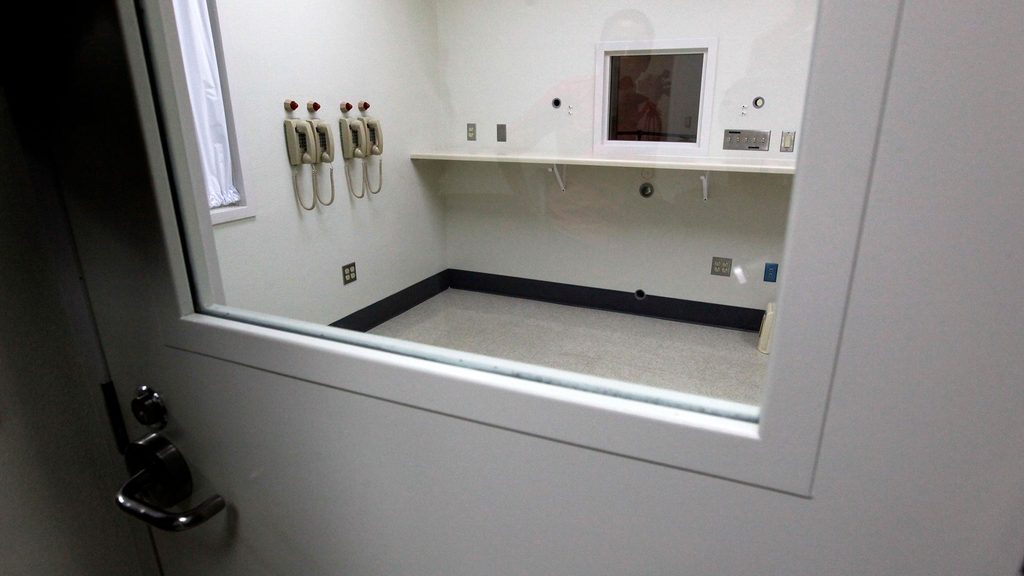
Pike's survival has also reopened a much broader American debate over whether lethal injection can reliably provide the controlled and constitutional execution that states say their protocols are designed to deliver. Lethal injection remains the predominant execution method across the United States, but repeated difficulties obtaining execution drugs and establishing intravenous lines have led some jurisdictions to revive or expand alternatives including firing squads, electrocution and nitrogen gas. At least seven prisoners before Pike survived abandoned lethal-injection attempts involving IV-access problems, according to reporting on her case, but the Death Penalty Information Center has described Pike as the first known prisoner in the modern era to survive after lethal execution drugs were actually administered. Her case has consequently become something different from an execution that was stopped before the drugs entered the prisoner's body. The controversy comes amid a complicated national picture: 23 states have abolished capital punishment, while California, Oregon and Pennsylvania have moratoriums, yet states that continue using the death penalty have experimented with additional methods as access to lethal-injection drugs has become increasingly difficult. Critics argue that Pike's ordeal demonstrates the potential for severe suffering when a procedure fails, while supporters of capital punishment maintain that lawful death sentences should still be carried out using methods that can withstand constitutional scrutiny.
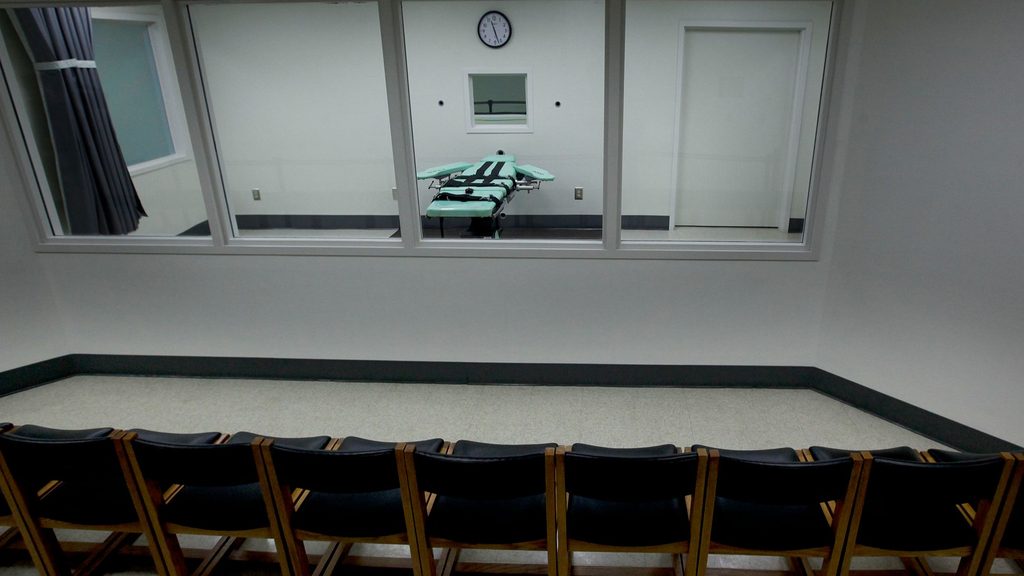
That debate is unfolding as the federal government moves in the opposite direction from Tennessee's temporary pause. Just days after Pike survived her lethal injection, Trump approved the execution by firing squad of former Army Maj. Nidal Malik Hasan, the military psychiatrist sentenced to death for killing 13 people and wounding more than 30 others in the 2009 mass shooting at Fort Hood, Texas. Pentagon spokesperson Sean Parnell announced the authorization Monday, declaring, «Judgement day for Hasan has finally come.» Acting Army Secretary Adam Telle subsequently scheduled Hasan's execution for December 3 at Fort Hood, although further federal litigation could still delay it. If the sentence is ultimately carried out, Hasan would become the first prisoner executed by the U.S. military since Army Pvt. John Bennett was hanged in 1961, a gap of 65 years. The decision also follows the Trump administration's move earlier this year to broaden permissible federal execution methods beyond lethal injection, including firing squads, electrocution and gas asphyxiation. Asked after Pike's failed execution whether her case might prompt him to reconsider how capital punishment is administered, Trump called what happened «an interesting situation» but added of lethal injection, «It shouldn't be very difficult.» While Tennessee is now examining how its execution process failed, the federal government is preparing for a military execution using an entirely different method.
Created by humans, assisted by AI.
 Trump says Iran could “take out” Los Angeles and San Diego, prompting fierce backlash
 Trump calls for New York Times and other news organizations to be arrested over crowd size reporting